
Social Phenomena China Behind the Buzzwords Like Tangping
- Date:
- Views:302
- Source:The Silk Road Echo
If you've been scrolling through Chinese social media lately, you've probably stumbled upon terms like Tangping (lying flat) or Neijuan (involution). These aren't just catchy slang—they're windows into a growing social movement among China's youth. Let’s dive deep into what these buzzwords really mean and why they’re shaking up society.
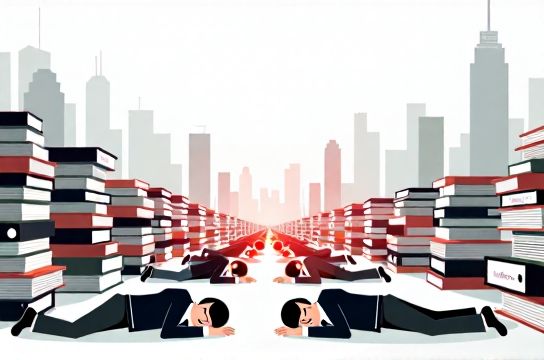
What Is Tangping? More Than Just Laziness
Tangping, literally "lying flat," emerged around 2021 as a quiet rebellion against relentless work culture. It’s not about being lazy—it’s a conscious choice to step back from the rat race. Imagine working 9-to-9, six days a week (that’s the infamous 996 work schedule), burning out by 30, and still unable to afford a home. That’s the reality for many young professionals in cities like Beijing and Shenzhen.
A 2022 survey by Southern Weekly found that over 65% of respondents aged 18–35 felt work-life balance was unattainable. No wonder "lying flat" went viral—it’s self-preservation in a high-pressure world.
Neijuan: When Hard Work Stops Paying Off
Then there’s Neijuan, or "involution." Picture this: everyone studies longer, works harder, spends more—but nobody gets ahead. It’s like running on a treadmill that keeps speeding up. In education, students now spend an average of 10+ hours daily studying, yet top university admission rates haven’t budged.
This sense of futility fuels disengagement. Why grind endlessly if the prize—homeownership, stable job, middle-class life—is slipping further away?
The Numbers Don’t Lie: Youth Under Pressure
Let’s break it down with real data:
| Metric | Data | Source |
|---|---|---|
| Youth Unemployment (16–24) | 21.3% | NBS, Q2 2023 |
| Avg. Home Price (Beijing) | ¥68,000/m² | China Real Estate Info |
| Workweek (Tech Sector) | 54–60 hrs | Caixin Survey |
| Under-35s Feeling Financial Stress | 76% | Pew Research |
These figures paint a picture of a generation stretched thin—economically, emotionally, and mentally.
Why This Matters Beyond China
Tangping isn’t just a local trend; it’s part of a global conversation about burnout, inequality, and the cost of success. From Japan’s ikigai to America’s Great Resignation, people everywhere are redefining what it means to live well.
In China, though, the stakes are higher. The one-child policy, skyrocketing living costs, and intense academic pressure have created a perfect storm. And while the government promotes "common prosperity," many young people feel left behind.
So… What’s Next?
Will Tangping fade as a fad? Or is it the start of a cultural shift? Signs point to the latter. More workers are seeking flexible jobs, startups are embracing four-day weeks, and mental health awareness is rising.
One thing’s clear: the old playbook—study hard, work hard, succeed—isn’t working anymore. As one Weibo user put it: "I’m not lying down because I’m weak. I’m lying down so I can breathe."