
Local Perspective China Insights into Modern Society
- Date:
- Views:261
- Source:The Silk Road Echo
Want to truly understand modern China? Forget the headlines and tourist brochures. Let’s dive into the real story — from bustling megacities to quiet village life, from digital dominance to shifting social values. This isn’t just a country in transition; it’s a society redefining itself at lightning speed.
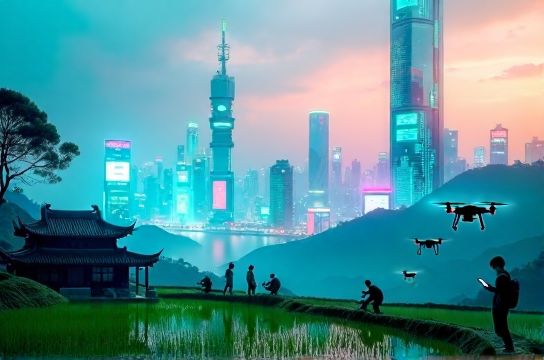
The Digital DNA of Daily Life
If there’s one thing that defines urban Chinese life today, it’s the smartphone. From paying for street food to booking doctor appointments, over 90% of mobile users rely on super-apps like WeChat and Alipay. Cash? Rarely seen. QR codes? Everywhere.
China leads the world in fintech adoption. In fact, mobile payment volume hit ¥432 trillion ($60 trillion USD) in 2023 — more than any other nation by far.
| Year | Mobile Payment Volume (in Trillion CNY) | Users (in Millions) |
|---|---|---|
| 2020 | 215 | 854 |
| 2021 | 271 | 926 |
| 2022 | 345 | 989 |
| 2023 | 432 | 1,032 |
This isn’t just convenience — it’s a cultural shift. Young people don’t carry wallets. Grandparents scan codes at wet markets. Even temples accept digital donations. The line between online and offline? Blurred beyond recognition.
Urban vs. Rural: Two Chinas?
Yes, Shanghai glows with neon and innovation. But venture inland, and you’ll find another reality. While cities enjoy high-speed rail and smart homes, many rural areas still grapple with aging populations and limited access to healthcare.
Yet, the gap is narrowing. Government initiatives like “Rural Revitalization” have boosted infrastructure. E-commerce platforms like Pinduoduo are bringing city goods to villages — and farm produce straight to urban consumers.
In 2023, rural e-commerce sales exceeded ¥2.5 trillion, up 18% year-on-year. Farmers livestream their harvests on Douyin (China’s TikTok), selling apples, mushrooms, and even live chickens with a few taps.
The New Social Contract
Young Chinese aren’t rebelling — they’re retreating. Terms like “tang ping” (lying flat) and “neijuan” (involution) reflect growing fatigue with relentless competition. Why grind 996 (9 AM–9 PM, 6 days a week) when the rewards feel out of reach?
Housing prices in cities like Beijing and Shenzhen can exceed 50 times the average annual income. That’s not a typo. And with marriage rates dropping and birth rates at historic lows (6.77 births per 1,000 people in 2023), many are choosing simpler, quieter lives.
Culture in Motion
Tradition isn’t dead — it’s being remixed. Hanfu (traditional clothing) is trendy again, especially among Gen Z. Confucian values mix with K-pop playlists and vegan cafes. It’s not nostalgia; it’s identity in flux.
Meanwhile, censorship shapes the digital landscape. Google? Blocked. Twitter? Gone. But local giants fill the void — Bilibili for youth culture, Xiaohongshu for lifestyle inspiration. The internet here isn’t freer or more restricted — it’s just different.
Final Thoughts
Modern China isn’t a monolith. It’s a mosaic of contradictions: high-tech and traditional, ambitious and exhausted, global and guarded. To understand it, you’ve got to look beyond the surface — talk to locals, swipe a QR code, take a bullet train to a small town.
This is a society building its own version of the future — one app, one decision, one quiet act of resistance at a time.