
Social Phenomena China Revealing Real Urban Dynamics
- Date:
- Views:192
- Source:The Silk Road Echo
Ever wondered why Beijing’s subway feels like a sardine can at 8 a.m., or why Shanghai’s skyline looks like it was designed by a sci-fi architect on caffeine? Welcome to the wild, wired world of Chinese urban life — where tradition dances with hyper-modernity, and every street corner tells a story. Let’s dive into the social phenomena shaping China’s cities today.
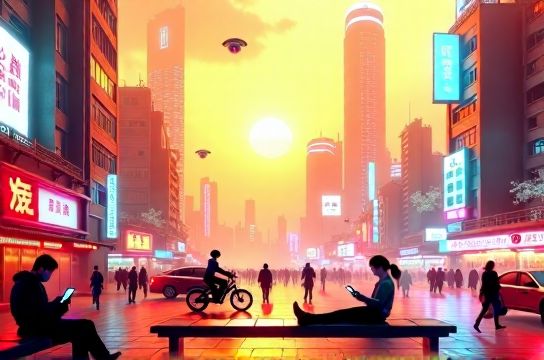
The Great Migration: From Farm to Sky
Over 60% of China’s population now lives in cities — up from just 19% in 1980. That’s over 800 million urban dwellers, making it the largest rural-to-urban migration in human history. People aren’t just moving; they’re chasing dreams in megacities like Shenzhen, once a fishing village, now a tech powerhouse rivaling Silicon Valley.
Digital Life at Warp Speed
In China, your phone isn’t just smart — it’s essential. Forget wallets; mobile payments via WeChat Pay and Alipay dominate. In 2023, 97% of urban Chinese used mobile payments daily. Need a bike? Scan and ride. Want dumplings at 2 a.m.? Meituan delivers in under 30 minutes. This isn’t convenience — it’s a lifestyle revolution.
| Metric | China (Urban) | Global Average |
|---|---|---|
| Mobile Payment Usage | 97% | 48% |
| Urban Population Growth (annual) | 2.1% | 1.8% |
| Shared Bike Users (millions) | 300+ | 50 |
The “Lie Flat” Movement: Pushback Against Hustle Culture
But not everyone’s racing to the top. Enter “Tang Ping” — the “lie flat” generation. Young professionals, buried under sky-high housing prices and 996 work schedules (9 a.m.–9 p.m., 6 days a week), are saying: Enough. They’re opting out of the rat race, choosing minimalism, and redefining success. It’s not laziness — it’s quiet rebellion.
Housing Hysteria: Apartments Over Love?
In cities like Beijing and Shenzhen, average home prices hit 70 times the annual income. Yes, you read that right. Many young couples delay marriage until they own property — because in urban China, your apartment is your résumé. Some even enter “naked marriages” (no house, no car) as an act of defiance.
The Rise of “Flash Markets” and Pop-Up Culture
Urban youth crave experiences, not just stuff. That’s why chaoji shichang (super markets) are booming — think neon-lit night markets selling bubble tea, vintage clothes, and handmade art. These pop-up hubs blend commerce with community, often run by Gen Z entrepreneurs using Douyin (China’s TikTok) to go viral overnight.
Green Spaces vs. Gray Skyscrapers
Despite the concrete jungle, cities are fighting back with green. Shanghai has added over 500 urban parks since 2015. Chengdu’s “park city” model integrates nature into planning — imagine working in a tower surrounded by bamboo forests. Sustainability isn’t trendy; it’s becoming policy.
So what’s the takeaway? China’s urban dynamics aren’t just about growth — they’re about tension. Between old and new, speed and stillness, ambition and burnout. And if you’re visiting or investing, understanding these social currents isn’t optional — it’s everything.