
Chinese Society Explained Through Everyday Life Stories Insights
- Date:
- Views:225
- Source:The Silk Road Echo
Ever wondered what makes Chinese society tick? It’s not just about ancient traditions or booming cities—it’s in the daily rhythms of ordinary people. From morning tai chi in Beijing parks to late-night hotpot chats in Chengdu, China’s soul lives in its everyday moments.
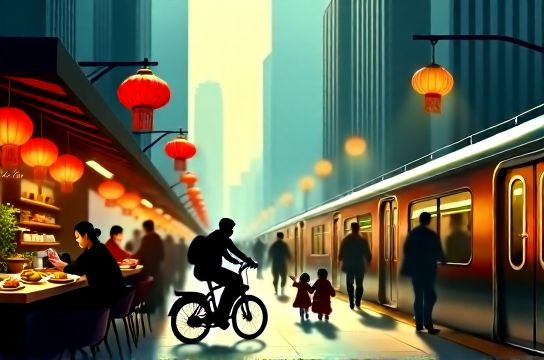
Take Liu Wei, a 34-year-old office worker in Shanghai. He wakes up at 6:30 a.m., grabs a jianbing (a savory crepe), and jumps on the subway. His 45-minute commute is packed—literally. Shanghai’s metro carries over 10 million passengers daily, one of the busiest in the world. But it’s not just about getting to work; it’s about shared silence, quick glances, and the unspoken rule: no loud phone calls.
Family remains the backbone of Chinese life. Despite rapid urbanization, over 60% of young adults still live with parents before marriage, according to a 2023 survey by China Youth Daily. Why? High housing prices, cultural expectations, and yes—free home-cooked meals. Dinner time is sacred. As Li Na, a teacher in Guangzhou, puts it: “My mom says instant noodles aren’t food. Real food takes time.”
But modernity is reshaping norms. Digital life is everywhere. Meet Chen Yu, a 28-year-old livestreamer in Hangzhou. She earns six figures selling skincare via Douyin (China’s TikTok). Her day? 10 hours online, building trust with fans through late-night Q&As and real-time product demos. In 2023, China’s livestream e-commerce market hit $420 billion in sales—that’s more than the entire GDP of most countries.
Here’s a snapshot of how daily habits reflect broader societal trends:
| Habit | Urban % | Rural % | Cultural Insight |
|---|---|---|---|
| Uses mobile payment daily | 92% | 68% | Digital trust replaces cash culture |
| Eats family dinner ≥5x/week | 74% | 89% | Family unity > individualism |
| Works overtime ≥3x/week | 61% | 45% | Hustle culture vs. work-life balance |
| Practices traditional hobby (calligraphy, tea, etc.) | 38% | 52% | Heritage pride in modern life |
And then there’s the guanxi game—social connections that open doors. Want a hospital appointment fast? Know someone. Land a job? Referrals matter more than resumes. A 2022 Peking University study found that 70% of jobs are filled through personal networks. It’s not corruption—it’s how trust works here.
Yet contradictions thrive. Young people crave freedom but feel duty-bound to care for aging parents. They post selfies online but avoid conflict offline. They love Starbucks but call it “a second living room.”
In short, Chinese society isn’t monolithic. It’s a blend of old and new, public duty and private dreams. To understand it, don’t just read the news—listen to the stories whispered over dumplings, typed in WeChat groups, or danced in park squares at dawn.