
Chinese Society Explained Through Daily Life
- Date:
- Views:270
- Source:The Silk Road Echo
Ever wondered what makes Chinese society tick? It’s not just about ancient traditions or futuristic skyscrapers — it’s the little things. From morning tai chi in the park to midnight dumpling runs, daily life in China paints a vivid picture of a culture balancing tradition and hyper-modernity.
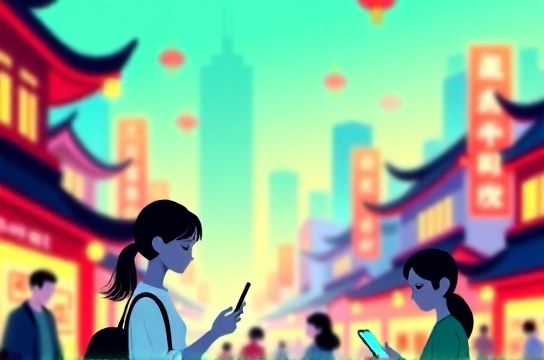
The Rhythm of Everyday Life
In cities like Beijing and Shanghai, mornings start early — really early. By 6:00 AM, parks are alive with retirees practicing tai chi, while street vendors serve steaming bowls of congee. Meanwhile, young professionals queue for bullet trains or squeeze into subway cars during one of the world’s most intense rush hours.
Work culture? Fast-paced. The infamous “996” schedule — 9 AM to 9 PM, 6 days a week — still echoes in tech hubs, though younger generations are pushing back. Work-life balance is becoming a hot topic, especially among urban millennials.
Social Fabric: Family & Relationships
Family remains the cornerstone. Over 74% of Chinese adults live with or near their parents, according to China National Bureau of Statistics (2023). This isn’t just about convenience — it’s filial piety, a Confucian value deeply embedded in the culture.
Dating, however, is evolving. With marriage rates dropping — only 6.1 marriages per 1,000 people in 2023, down from 9.9 in 2013 — many young people prioritize careers over settling down. Yet, family pressure to marry persists, sparking the cringe-worthy but real phenomenon of ‘blind date fairs’ in city parks.
Digital Life: Super-Apps Rule All
If you think your phone is essential, try living in China without WeChat. More than a messaging app, it’s a wallet, ID card, social network, and delivery service. Over 1.3 billion users rely on it daily. Alipay isn’t far behind.
Cash? Nearly extinct. From street hawkers to temple donations, QR codes dominate. In fact, mobile payments reached $56 trillion in transaction volume in 2023 — more than the GDP of the entire United States.
| Metric | China (2023) | Global Average |
|---|---|---|
| Mobile Payment Penetration | 86% | 48% |
| Daily WeChat Users | 1.3 billion | N/A |
| Urban Commute Time (avg.) | 47 min | 36 min |
| Marriage Rate (per 1,000) | 6.1 | 6.9 |
Food: More Than Just Eating
Meals are social events. A typical dinner isn’t about speed — it’s about connection. Hot pot nights, where everyone dips ingredients into a bubbling communal pot, symbolize unity. Even office workers bond over lunchtime roujiamo (Chinese burgers) or spicy Sichuan noodles.
The Urban-Rural Divide
While Shanghai glows with neon and innovation, rural villages move at a different pace. Over 450 million people still live in the countryside, where farming, dialects, and ancestral temples shape identity. Yet migration to cities continues — nearly 64% of China’s population now lives in urban areas, up from 36% in 2000.
Final Thoughts
Chinese society isn’t monolithic. It’s a dynamic blend of old and new, collective and individual, fast and slow. To understand it, don’t just read the headlines — walk through a morning market, scan a QR code for tea, or join a karaoke night. That’s where the real story unfolds.