
Chinese Society Explained Beyond the Surface Myths
- Date:
- Views:251
- Source:The Silk Road Echo
When it comes to understanding Chinese society, most Western narratives scratch only the surface—think dragons, dumplings, and discipline. But the real story? It’s way more nuanced, dynamic, and frankly, fascinating.
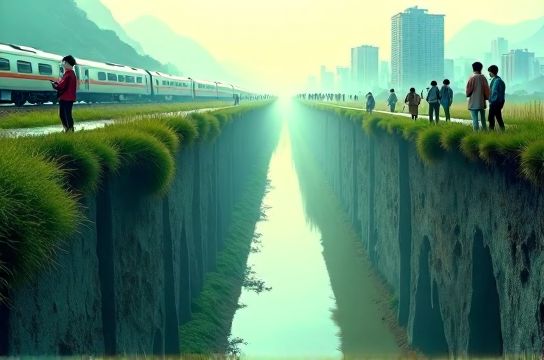
Let’s bust some myths and dive into what modern Chinese society actually looks like in 2024—from family values to digital life, urban hustle to rural roots.
The Myth of Uniformity: China Is Not One-Size-Fits-All
You’ve probably heard that China is a monolithic culture. Spoiler: it’s not. With 56 officially recognized ethnic groups and over 200 dialects, regional diversity runs deep. A Gen Z tech worker in Shenzhen lives worlds apart from a tea farmer in Yunnan.
Consider this: China’s GDP per capita varies wildly by region. Here’s a snapshot:
| Region | GDP per Capita (USD) | Urbanization Rate |
|---|---|---|
| Beijing | 24,500 | 87% |
| Shanghai | 27,800 | 89% |
| Guangdong | 18,300 | 75% |
| Gansu | 7,200 | 52% |
| Tibet | 6,800 | 36% |
As you can see, economic realities—and lifestyles—vary dramatically.
Family First, But on New Terms
The Confucian ideal of filial piety still echoes, but today’s Chinese families are redefining tradition. Urban millennials face the "4-2-1" dilemma: one child supporting two parents and four grandparents. No pressure, right?
Marriage rates are dropping—especially among women with college degrees. In 2023, Shanghai reported a record low marriage rate of just 4.4‰, while divorce rates have climbed steadily since 2010.
Digital Life: WeChat Is the Swiss Army Knife of Daily Living
If you think apps are convenient, try living in a society where one app does it all. WeChat isn’t just messaging—it’s banking, shopping, doctor appointments, and even government services. Over 1.3 billion users rely on it daily.
And let’s talk e-commerce. Singles’ Day (November 11) isn’t just a sale—it’s an economic event. In 2023, Alibaba raked in $113 billion in gross merchandise volume. Yes, billion.
The Education Pressure Cooker
“Get good grades, get a good job”—this mantra drives millions. The Gaokao, China’s national college entrance exam, is a make-or-break moment. Over 12 million students took it in 2023, competing for limited spots in top universities.
But burnout is real. Recent policies like the “Double Reduction” initiative aim to cut homework and after-school tutoring loads—yet parental anxiety remains sky-high.
Young People Are Pushing Back
Enter the “lying flat” (躺平) movement—a quiet rebellion against relentless hustle culture. Some young workers are opting out of long hours and high-pressure jobs, choosing minimalism and mental well-being instead.
Meanwhile, “involution” (内卷)—a term describing hyper-competition with diminishing returns—has become a rallying cry. It’s not laziness; it’s exhaustion with a system that demands more for less.
So What’s the Real Takeaway?
China isn’t just rising—it’s evolving. Beneath the headlines of growth and control lies a society wrestling with identity, balance, and belonging. From AI-powered cities to ancestral villages, it’s a land of contrasts shaped by history and hurtling toward the future.
Forget the stereotypes. The real China? Complex, contradictory, and completely captivating.