
Chinese Society Explained Beyond the Surface Norms
- Date:
- Views:207
- Source:The Silk Road Echo
When you think of China, what comes to mind? Skyscrapers in Shanghai? The Great Wall? Or maybe dumplings and tea ceremonies? While these are all iconic, they only scratch the surface of a society that’s deeply layered, subtly nuanced, and constantly evolving. Let’s dive into the real China — not just the postcard version, but the heartbeat behind the headlines.
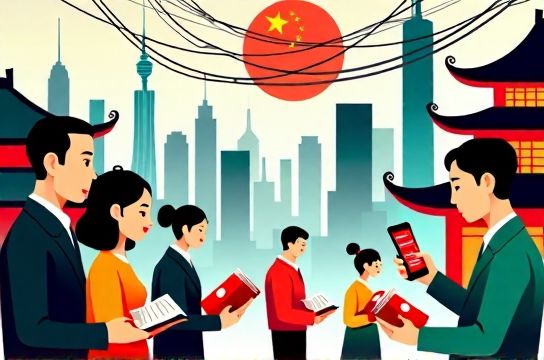
The Rhythm of Guanxi: It’s Not Who You Know, It’s How You Know Them
In Western cultures, networking is often transactional. In China, it’s relational. Enter guanxi — a web of personal connections that influences everything from business deals to getting your kid into a good school. Think of it as social credit with emotional interest.
A 2023 survey by Peking University found that over 68% of urban professionals credited guanxi for career advancement, compared to just 32% who relied solely on qualifications. That’s not corruption — it’s culture.
| Factor | Influence in Daily Life (Scale 1-10) |
|---|---|
| Guanxi (Relationships) | 9.2 |
| Education | 8.7 |
| Income Level | 7.5 |
| Political Affiliation | 6.3 |
Family: The Invisible Government
If guanxi runs society, family runs the household — literally. Confucian values still echo through modern Chinese homes, where filial piety isn’t just respected; it’s expected. A 2022 National Bureau of Statistics report revealed that 74% of adults aged 22–35 live with their parents, not out of laziness, but obligation.
And let’s talk about the ‘silent pressure’ of marriage. The average age for first marriage in cities like Beijing and Shenzhen is now 28.7 for women and 30.4 for men — up from 24 and 26 a decade ago. But try telling that to your auntie during Lunar New Year dinner.
Digital Life: WeChat Isn’t an App, It’s a Lifestyle
You don’t just use WeChat in China — you live in it. With over 1.3 billion active users, it’s email, Instagram, Uber, Venmo, and your ID card all rolled into one. Need to pay your electricity bill? WeChat. Want to see a doctor? WeChat. Applying for a job? Yep, WeChat.
This super-app dominance reflects a broader cultural trait: efficiency through integration. Why juggle five apps when one does it all?
The Education Grind: Gaokao and the Weight of Expectation
In China, education isn’t just a path to success — it’s a national sport. The gaokao, or national college entrance exam, is a make-or-break moment. Over 12 million students take it each year, competing for spots in top universities with acceptance rates lower than Harvard’s.
Parents invest heavily — both emotionally and financially. A 2023 study showed urban families spend an average of 28% of their annual income on education-related expenses, including tutoring and extracurriculars.
Urban vs. Rural: Two Chinas, One Nation
While Shanghai dazzles with its futuristic skyline, nearly 35% of China’s population still lives in rural areas. The urban-rural divide isn’t just economic — it’s cultural. Migrant workers, numbering over 290 million, often leave villages to build cities they can’t afford to live in.
Yet, this gap is narrowing. E-commerce platforms like Pinduoduo have brought affordable goods to remote areas, and digital payment adoption in rural regions grew by 64% from 2020 to 2023.
Final Thoughts: Understanding the Unseen
China isn’t loud revolutions or silent conformity — it’s quiet resilience, deep tradition, and rapid reinvention. To truly understand it, you’ve got to look beyond the surface norms and feel the rhythm beneath: the unspoken rules, the weight of history, and the drive for a better tomorrow.
So next time you hear about China, don’t just see the headlines. See the people, the patterns, and the pulse.