
Social Phenomena China Behind the Buzzwords Like Involution
- Date:
- Views:278
- Source:The Silk Road Echo
Ever heard of 'involution' in China? No, it’s not a biology class flashback. It’s the buzzword sweeping through Chinese youth culture, workplaces, and even dinner table chats. But what’s really behind this term—and others like 'lying flat' or 'tang ping'? Let’s dive into the social phenomena shaping modern China, with real data, sharp insights, and zero fluff.
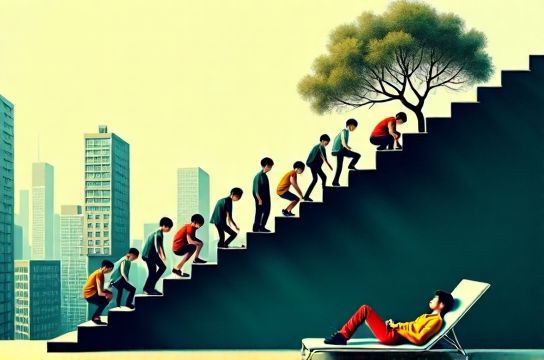
What Is 'Involution' (Neijuan) Anyway?
In simple terms, involution refers to intense competition that brings no real progress—everyone works harder, but nobody wins. Imagine running on a treadmill at full speed… and going nowhere. That’s neijuan in a nutshell.
A 2023 survey by Peking University found that 68% of urban white-collar workers feel trapped in high-pressure, low-reward jobs. Meanwhile, over 75% of college students report anxiety about future employment due to overcrowded job markets.
The Rise of 'Lying Flat' (Tang Ping)
In response to involution, some young Chinese are choosing to 'lie flat'—opting out of the rat race. This isn’t laziness; it’s a quiet rebellion. They’re saying: 'I won’t burn out just to keep up.'
Data shows a shift:
| Year | Youth (18–35) Preferring Work-Life Balance Over Promotion | Annual Overtime Hours (Avg.) |
|---|---|---|
| 2018 | 42% | 210 |
| 2023 | 67% | 312 |
As you can see, more young people now value peace over prestige. And who can blame them?
From Hustle Culture to Mental Health Awareness
China’s rapid economic growth came with a hidden cost: mental health. A 2022 study in The Lancet revealed that 173 million Chinese adults suffer from mental disorders, yet only 8% seek help—often due to stigma.
But change is coming. Online communities, therapy apps, and influencers are normalizing mental wellness. Keywords like 'emotional management' and 'burnout recovery' now trend on Weibo and Xiaohongshu.
The Role of Social Media & Education Pressure
Schools play a big part too. The infamous Gaokao (college entrance exam) creates early pressure. Students average 10–12 hours of study daily during senior year. Is it worth it?
Not always. With over 11.93 million graduates in 2023, many end up underemployed. A Zhaopin.com report shows only 55% find jobs within six months of graduation.
So What’s Next?
The involution vs. lying flat debate reflects a deeper societal shift. Young Chinese aren’t rejecting hard work—they’re demanding meaningful progress. Companies noticing this are offering flexible hours, remote options, and mental health days.
And hey, maybe 'doing less to live more' isn’t such a bad idea after all.
In a world obsessed with hustle, sometimes the boldest move is to pause.