
Chinese Society Explained Beyond the Headlines Today
- Date:
- Views:289
- Source:The Silk Road Echo
When you think of China, what comes to mind? Skyscrapers in Shanghai? The Great Wall? Or maybe TikTok trends and tech giants like Huawei? While the headlines love to focus on politics or economic growth stats, the real story of Chinese society today is far more colorful, complex, and human.
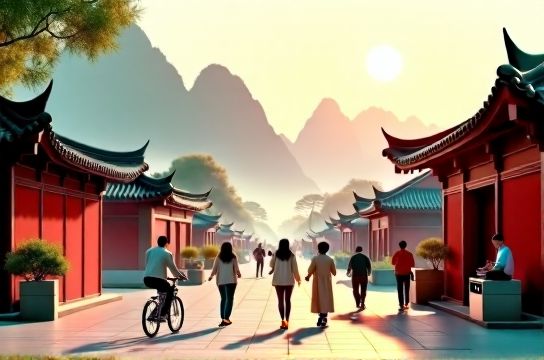
Let’s peel back the surface and explore modern Chinese life — from digital lifestyles to shifting family values, all backed by real data and a dash of cultural insight.
The Digital-First Lifestyle: More Than Just WeChat
If you’re not living in China, you might not realize just how deeply technology is woven into daily life. Forget "app culture" — in China, it’s life culture. Over 1.05 billion people are online (CNNIC, 2023), and nearly all of them use smartphones as Swiss Army knives for everything: paying street vendors, booking doctor visits, or even scanning tombstones for ancestral stories during Qingming Festival.
WeChat isn’t just messaging — it’s your wallet, ID, social network, and office tool rolled into one. And don’t get us started on Alipay’s mini-programs. Need to renew your metro pass, order bubble tea, and pay property taxes in under two minutes? Done.
Generational Shifts: From "Lying Flat" to Hustle Culture
You’ve probably heard of "tang ping" or "lying flat" — the quiet rebellion of young Chinese rejecting the 9-to-9 work grind. But here’s the twist: while some opt out, others are doubling down. A 2023 survey by Zhaopin showed that 43% of urban millennials still prioritize career success over work-life balance.
This tension reflects deeper societal changes. Parents who lived through scarcity push their kids toward stability; but those same kids face sky-high housing prices and competitive job markets. No wonder mental health awareness is rising — therapy apps like KnowYourself have seen a 200% user increase since 2021.
Urban vs. Rural: Two Chinas?
Yes and no. While coastal cities like Shenzhen buzz with innovation, rural areas are quietly transforming too. E-commerce platforms like Pinduoduo have brought affordable goods — and income — to villages. Farmers livestream harvests and sell directly to city dwellers. In 2022, rural online retail sales hit ¥2.2 trillion (~$310B USD).
But disparities remain. Check this snapshot:
| Metric | Urban Avg. Income (2023) | Rural Avg. Income (2023) |
|---|---|---|
| Annual Disposable Income | ¥51,821 | ¥20,133 |
| Internet Penetration | 85% | 66% |
| Higher Education Graduates | 42% | 14% |
Data source: National Bureau of Statistics of China
Family Dynamics: The One-Child Echo
China’s one-child policy may be gone, but its ripple effects linger. Many millennials are "4-2-1" families: one child supporting two parents and four grandparents. This "olive-shaped" pressure is real — and reshaping marriage and fertility trends.
In 2023, the average marriage age hit 28.8 for women and 30.2 for men (up from 24 and 26 in 2010). Birth rates? At a historic low of 6.77 births per 1,000 people. The government’s pushing pro-natal policies — baby subsidies, extended maternity leave — but cultural shifts run deep.
Closing Thoughts: Beyond the Binary
China isn’t just rising or resisting — it’s evolving. It’s a place where ancient traditions coexist with AI-powered convenience, where youth burnout meets entrepreneurial energy, and where local lives defy global stereotypes.
To understand Chinese society today, forget the binaries. Look instead at the messy, vibrant middle — where real people navigate change one QR code, family chat, and bowl of hotpot at a time.