
Inside China's Social Phenomena From a Ground View
- Date:
- Views:249
- Source:The Silk Road Echo
If you've walked through a Beijing hutong or scrolled WeChat Pay at a Shanghai noodle stand, you've brushed shoulders with China’s living social fabric. Beyond the skyscrapers and high-speed rails, everyday life here pulses with contradictions — tradition meets tech, collectivism dances with individualism, and street vendors compete with AI-powered kiosks.
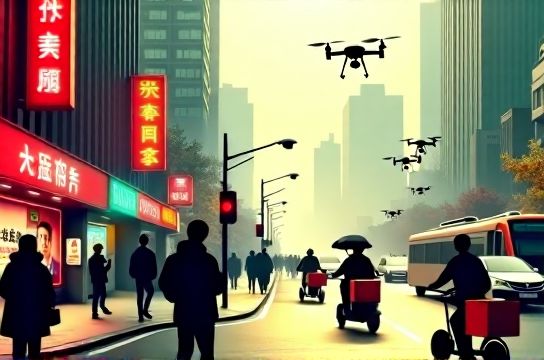
Let’s dive into the real China, not the one in headlines, but the one on the ground — where digital integration, urban-rural divides, and youth anxiety shape daily routines.
The Digital Revolution: Everyone’s Online, All the Time
In 2024, over 1.05 billion Chinese are online — that’s 74% of the population. Mobile payments? Nearly universal. A 2023 CNNIC report shows 98% of urban users rely on QR codes for transactions, from metro rides to temple donations.
| Metric | Value (2023) | Year-over-Year Change |
|---|---|---|
| Total Internet Users | 1.05 billion | +2.4% |
| Mobile Payment Penetration (Urban) | 98% | +1.8% |
| Rural Internet Access | 65% | +3.1% |
| Average Daily Screen Time | 3.7 hours | +12 min |
This isn’t just convenience — it’s surveillance-lite. Your bike rental, food order, and hospital visit all feed into a semi-transparent data ecosystem. Locals shrug: “It’s efficient,” they say. But try opting out — good luck buying train tickets without an app.
The Hukou Hang-Up: Why Not Everyone Can Thrive in the City
China’s hukou system — a household registration policy — quietly segregates urban opportunity. Migrant workers power cities but often can’t enroll kids in local schools or access public housing.
Over 290 million people live away from their registered hometowns. Yet only 35% of them enjoy full urban benefits. In Shenzhen, migrants make up 70% of the population but face higher barriers to healthcare and education.
The government’s easing rules in smaller cities, but megacities like Beijing remain tight. This invisible wall fuels inequality — not by income alone, but by access.
Youth Under Pressure: The ‘Lying Flat’ Generation
Enter Gen Z, caught between sky-high expectations and shrinking opportunities. Competition starts young: gaokao (college entrance exam) stress is legendary, and landing a white-collar job now feels like winning the lottery.
Hence the rise of ‘tang ping’ — ‘lying flat’. It’s not laziness; it’s quiet resistance. A 2023 survey found 43% of urban youth aged 18–30 feel ‘chronically exhausted’ by work culture. Many opt for lower-paying but less demanding gigs — think indie bookstores or podcasting.
Yet even this rebellion is commodified. ‘Lying flat’ cafes and merch exist. Capitalism, it seems, monetizes even burnout.
Old Meets New: How Tradition Survives in Modern Life
Walk into a Chengdu teahouse: elders play mahjong, steam rises from baozi baskets, while nearby, a teen films a TikTok dance. This blend defines modern China — ancestral rituals coexist with digital obsession.
During Lunar New Year, billions travel home despite Zoom calls being free. Why? Guoxiang — family obligation — still trumps convenience. And Confucian values? They’re baked into workplace hierarchies and parenting styles.
Yet modernity pushes back. Dating apps boom, and 'single dog' (a self-mocking term for singles) culture spreads. Marriage rates dropped to 4.6 per 1,000 in 2023 — down from 9.9 in 2013.
Final Thoughts: A Society in Motion
China isn’t monolithic. It’s a patchwork of progress and pressure, connection and control. To understand it, don’t just study policies — ride the subway, chat with a street vendor, notice who’s offline.
The future? Maybe more digital inclusion, maybe deeper divides. But one thing’s clear: on the ground, life moves fast — and never stops adapting.