
Chinese Society Explained Beyond the Headlines
- Date:
- Views:298
- Source:The Silk Road Echo
When you think of China, what comes to mind? Skyscrapers in Shanghai? Ancient temples in Xi’an? Or maybe those viral TikTok videos from Chengdu’s tea houses? While the headlines often focus on politics or economics, the real story of Chinese society is far richer — and way more fascinating.
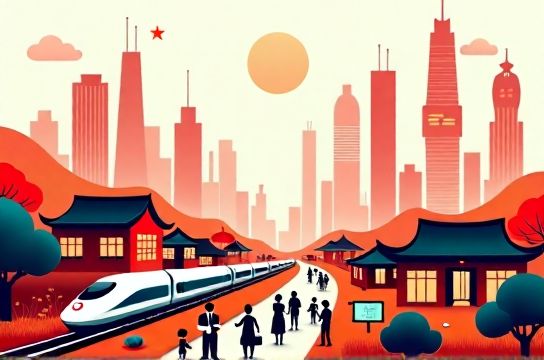
Let’s peel back the surface and explore the heartbeat of modern China: its people, values, and everyday life. We’re talking Confucian roots meeting digital hustle, family loyalty in a fast-moving world, and how tradition dances with innovation.
The Soul of Chinese Culture: Harmony, Family & Hard Work
At its core, Chinese society runs on three big ideas: harmony (he), family (jia), and hard work (pinfen). These aren’t just buzzwords — they shape how people live, work, and relate to one another.
Confucianism still quietly guides daily behavior. Respect for elders, education as a path to success, and group over individual needs — these values are baked into everything from school exams to office hierarchies.
Urban vs. Rural: Two Chinas, One Nation
China isn’t one single story. It’s a patchwork of contrasts. In cities like Beijing and Shenzhen, you’ve got tech millionaires sipping oat milk lattes while coding AI apps. Meanwhile, in rural provinces like Guizhou, farmers still grow rice by hand and celebrate lunar festivals with ancestral rites.
Here’s a snapshot of the urban-rural divide:
| Metric | Urban Areas | Rural Areas |
|---|---|---|
| Average Monthly Income (2023) | ¥11,500 (~$1,600) | ¥4,800 (~$670) |
| Internet Penetration | 85% | 62% |
| Higher Education Graduates | 40% of adults | 12% of adults |
This gap is narrowing, thanks to government investment and migration. Over 290 million people are internal migrants — mostly rural workers building cities and sending money home. That’s like the entire population of the U.S. on the move!
Digital Life: Super Apps & Social Credit?
Forget Facebook and Amazon — in China, it’s all about WeChat and Alipay. These ‘super apps’ do everything: pay bills, book doctors, hail cabs, and even file taxes. Over 900 million people use them daily. It’s not convenience — it’s survival.
And yes, the social credit system exists — but it’s less ‘Black Mirror’ and more ‘reputation score.’ Pay your loans on time? Good citizen badge. Jaywalk? Maybe a temporary ban from high-speed trains. It’s controversial, but many locals see it as promoting responsibility.
Youth Culture: Pressure, Dreams & Quiet Rebellion
Meet the post-90s and post-00s generations. They’re fluent in English, obsessed with K-pop, and stressed out by the ‘996’ work culture (9 AM to 9 PM, 6 days a week). The term ‘involution’ (neijuan) went viral because it captures their burnout — working harder just to stay in place.
Yet, they’re also redefining success. More young people are choosing freelance gigs, eco-living, or returning to craft traditions. ‘Lying flat’ (tang ping) might be a meme, but it reflects a real desire to slow down.
Family Ties: From Four Generations Under One Roof to Only Children
Thanks to the one-child policy (1979–2015), many urban families have just one kid supporting two parents and four grandparents — the ‘4-2-1’ problem. This puts huge pressure on the younger generation, both emotionally and financially.
But family remains sacred. During Lunar New Year, billions travel across the country to reunite — the largest annual human migration on Earth (over 3 billion trips!).
Final Thoughts: A Society in Motion
China isn’t static. It’s a nation balancing ancient values with hyper-modernity, collective duty with personal dreams. Understanding it means looking beyond the headlines — past the GDP stats and geopolitical noise — to see the humans behind the headlines.
So next time you hear about China, remember: it’s not just a superpower. It’s a society shaped by history, humor, hustle, and heart.