
Second Tier City Development in China
- Date:
- Views:402
- Source:The Silk Road Echo
China’s urban evolution is no longer just about Shanghai or Beijing. The real action? It’s happening in the second tier cities—places like Chengdu, Hangzhou, Wuhan, and Xi’an. These rising stars are rewriting the rules of economic growth, innovation, and quality of life.
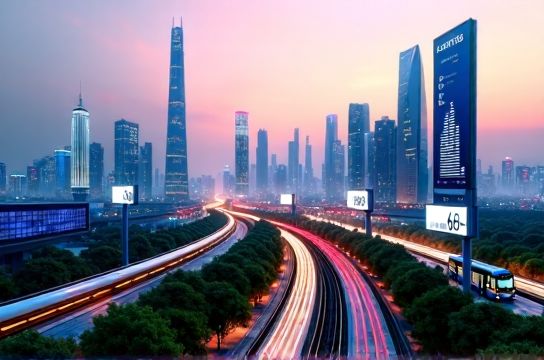
While first-tier cities face congestion, sky-high rents, and strict hukou (household registration) policies, second tier cities offer a sweet spot: rapid development without the chaos. In 2023, these cities collectively contributed over 38% of China’s GDP, up from 31% in 2015—a clear sign of shifting momentum.
Take Hangzhou, for example. Home to Alibaba, it’s become a tech powerhouse. Its digital economy accounted for 60% of local GDP in 2023. Meanwhile, Chengdu has emerged as the 'Silicon Valley of the West,' attracting global firms like Intel and Siemens with competitive tax incentives and a lower cost of living.
But what’s really fueling this boom? Three key drivers:
- Government Policy: The 'New Urbanization Plan' prioritizes balanced regional development. Cities like Chongqing and Zhengzhou received over ¥200 billion in infrastructure investment between 2020–2023.
- Talent Influx: Relaxed hukou rules have drawn millions. Wuhan added over 1 million new residents from 2021–2023, many of them college grads.
- Industrial Upgrading: From auto manufacturing in Changchun to AI research in Suzhou, these cities are moving beyond low-cost labor into high-value sectors.
Let’s break down how some top second tier cities stack up:
| City | GDP (2023, RMB Billion) | Population (Million) | Key Industries | Average Monthly Rent (1BR) |
|---|---|---|---|---|
| Hangzhou | 1,875 | 12.2 | Tech, E-commerce, Fintech | ¥3,200 |
| Chengdu | 2,080 | 21.2 | Semiconductors, Biotech, Logistics | ¥2,400 |
| Wuhan | 1,980 | 13.6 | Automotive, Optoelectronics, Education | ¥2,100 |
| Xi'an | 1,320 | 13.0 | Aerospace, Cultural Tourism, IT | ¥1,900 |
As you can see, even though Chengdu leads in population and GDP, its rent remains significantly lower than Shanghai’s average of ¥6,000. That gap is precisely why young professionals and startups are flocking here.
The cultural appeal also can’t be ignored. Chengdu’s panda bases and spicy hotpot, Xi’an’s Terracotta Army, and Hangzhou’s West Lake blend modernity with heritage—making these cities not just livable, but lovable.
Looking ahead, the future is bright. By 2030, analysts project that second tier cities will host over 40% of China’s middle-class consumers. With 5G rollout, high-speed rail expansion, and green urban planning, they’re not chasing first-tier status—they’re redefining what it means to be a world-class city.
In short: if you want to understand where China is headed, stop looking at the skyline of Pudong. Look west, look inland, look smart.