
Religion and Belief in Modern China
- Date:
- Views:324
- Source:The Silk Road Echo
In today’s China, religion isn’t just about ancient temples or quiet monasteries—it’s a living, breathing part of society that quietly shapes lives from bustling cities to remote villages. While the country is officially atheist, belief thrives in diverse forms, blending tradition, identity, and personal meaning. Let’s dive into the spiritual heartbeat of modern China.
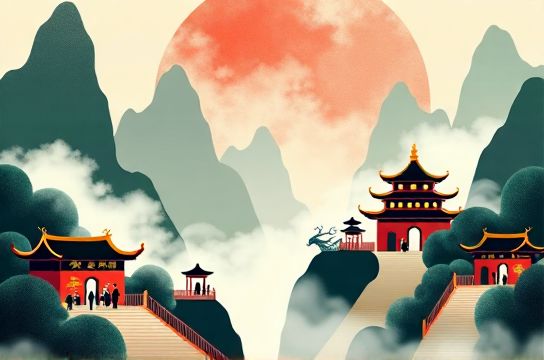
The Big Five: Recognized Religions
China officially recognizes five religions: Buddhism, Taoism, Islam, Catholicism, and Protestantism. These aren’t just labels—they represent millions of believers and centuries of cultural evolution.
| Religion | Estimated Followers (Million) | Main Regions | Key Notes |
|---|---|---|---|
| Buddhism | 180–250 | Tibet, Yunnan, Sichuan | Most widespread; blends with folk beliefs |
| Taoism | 40–60 | Eastern & Southern China | Deeply tied to Chinese philosophy and festivals |
| Islam | 20–25 | Xinjiang, Ningxia, Gansu | Primarily Hui and Uyghur Muslims |
| Protestantism | 30–50 | Urban centers, rural areas | Rapid growth; many unregistered 'house churches' |
| Catholicism | 10–12 | Northern & Coastal regions | Vatican-China tensions affect oversight |
Faith Beyond Labels: Folk Religion & Syncretism
Here’s the twist—many Chinese don’t pick one religion. Instead, they practice what scholars call ‘Chinese folk religion’—a mix of ancestor worship, local deities, and Buddhist-Taoist rituals. Lighting incense at a temple? That might be less about doctrine and more about family tradition or seeking good fortune.
A 2021 survey by the Pew Research Center found that only about 10% of Chinese adults identify strongly with an organized religion. Yet, over 50% engage in some form of religious or spiritual practice. Why? Because belief here isn’t always about belonging—it’s about doing.
Government & Religion: A Delicate Balance
China’s approach to religion is best described as ‘regulated tolerance.’ The government supports ‘patriotic religious activities’ but keeps tight control through bodies like the State Administration for Religious Affairs. All religious groups must register, and teachings must align with socialist values.
This means no foreign influence—especially online. In recent years, authorities have cracked down on unapproved churches, removed crosses from rooftops, and restricted Islamic practices in Xinjiang. Critics call it repression; officials say it’s about stability and national unity.
Urban Spirituality: The New Face of Faith
Move to Shanghai or Beijing, and you’ll find something unexpected: yoga studios quoting Laozi, meditation apps using Buddhist mantras, and young professionals exploring mindfulness with a Confucian twist. This isn’t traditional religion—it’s spiritual consumerism, where belief becomes a lifestyle choice.
Temples are adapting too. Some now offer Wi-Fi, mobile donation QR codes, and even e-blessings. Mount Emei and Wutai Shan aren’t just pilgrimage sites—they’re Instagram hotspots.
What’s Next?
Religion in China won’t disappear—it’s too deeply woven into culture. But its future is hybrid: state-approved institutions coexisting with underground churches, ancient rituals meeting digital innovation, and personal spirituality rising amid material success.
Whether you’re a believer, a skeptic, or just curious, one thing’s clear: faith in China is not dying—it’s evolving.