
How Festivals Reflect Chinese Social Values
- Date:
- Views:323
- Source:The Silk Road Echo
When it comes to understanding a culture, few things are as revealing as its festivals. In China, traditional celebrations aren’t just about fireworks and feasts—they’re living reflections of deep-rooted social values like family unity, respect for ancestors, harmony with nature, and collective well-being. Let’s dive into how major Chinese festivals mirror the soul of Chinese society.
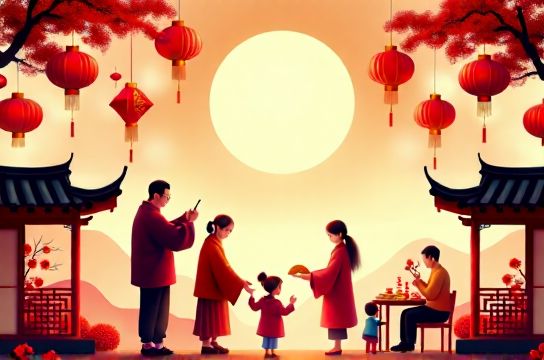
The Family First Mentality: Spring Festival
No festival screams “family” louder than the Spring Festival (Chinese New Year). Every year, hundreds of millions of people embark on the world’s largest human migration—Chunyun—just to return home. In 2023, over 1.8 billion trips were made during this period, according to China’s Ministry of Transport.
This massive movement isn’t about vacation—it’s about obligation and love. Families gather for Nian Ye Fan (reunion dinner), where dishes like dumplings symbolize wealth and togetherness. The red envelopes (hongbao) passed to children? They’re not just gifts; they’re blessings wrapped in tradition.
Honoring the Past: Qingming Festival
If Spring Festival is about the present family, Qingming Festival (Tomb-Sweeping Day) is about honoring the past. Held around April 4–6, this festival emphasizes filial piety—a core Confucian value.
People visit ancestral graves, clean tombstones, offer food, and burn joss paper. It’s a quiet but powerful reminder that Chinese society places great importance on lineage and remembrance. In urban areas, digital memorials are now supplementing physical visits, showing how tradition evolves without losing meaning.
Balancing Yin and Yang: Mid-Autumn Festival
The Mid-Autumn Festival celebrates harvest and moon worship, but at its heart lies the idea of balance—between humans and nature, and between individuals and community. The full moon symbolizes completeness and reunion.
Families share mooncakes, often rich and sweet, reflecting abundance. Interestingly, a 2022 survey by Alibaba showed that mooncake sales reached over 5 billion RMB annually, with innovative flavors like durian and ice cream gaining popularity among younger generations.
| Festival | Date (Lunar) | Core Value | Key Tradition |
|---|---|---|---|
| Spring Festival | 1st day of 1st month | Family Unity | Reunion Dinner, Red Envelopes |
| Qingming Festival | 15 days after Spring Equinox | Respect for Ancestors | Tomb Sweeping, Offerings |
| Mid-Autumn Festival | 15th day of 8th month | Harmony & Balance | Mooncake Sharing, Moon Gazing |
| Dragon Boat Festival | 5th day of 5th month | Patriotism & Health | Racing, Zongzi Eating |
More Than Just Celebration
These festivals aren’t just cultural relics—they actively reinforce values in modern life. Schools teach festival stories, companies give holiday bonuses, and media runs special programs. Even in fast-paced cities like Shanghai or Shenzhen, people slow down to honor these moments.
In a world where individualism often dominates, Chinese festivals stand as a testament to collectivism, continuity, and emotional connection. They remind us that behind every firecracker, mooncake, or paper offering is a deeper message: we’re part of something bigger than ourselves.