
The Role of Tradition in Modern China
- Date:
- Views:274
- Source:The Silk Road Echo
In today’s fast-paced, tech-driven China, you might think ancient traditions have taken a backseat. But look a little closer — from Lunar New Year fireworks lighting up Shanghai skyscrapers to Gen Z queuing for hanfu photo shoots — tradition isn’t just surviving; it’s evolving with swagger.
Why Tradition Still Matters
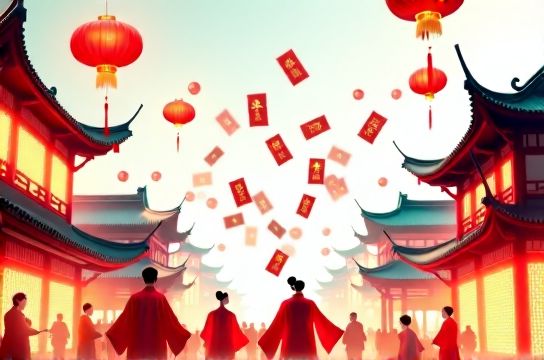
China’s cultural DNA runs deep. Over 90% of Chinese citizens celebrate the Spring Festival (Lunar New Year), according to a 2023 survey by the National Bureau of Statistics. That’s over 1.2 billion people reconnecting with family rituals, red envelopes, and dumpling-making marathons — not because they have to, but because it feels like home.
But tradition here isn’t frozen in time. It’s being remixed. Think Confucian values of respect and harmony influencing modern workplace culture, or traditional medicine seeing a 15% annual growth in market value as young urbanites turn to guasha and herbal teas for wellness.
Tradition Meets Technology: A Cultural Glow-Up
Digital platforms are giving old customs new life. During the 2024 Lantern Festival, Bilibili, China’s YouTube-meets-TikTok, streamed a virtual temple fair with 8 million live viewers. Users could ‘light’ digital lanterns and send animated couplets — blending ritual with interactivity.
And let’s talk fashion. The hanfu movement has exploded, especially among teens and twentysomethings. A 2023 report by iiMedia Research found that China’s hanfu market hit ¥10.4 billion (~$1.5B USD), growing at 20% YoY. Not bad for robes that originated over a thousand years ago.
Cultural Confidence on the Rise
This revival isn’t accidental. The government promotes guoxue (national learning) in schools and media, pushing calligraphy, classical poetry, and martial arts into mainstream education. In 2022, over 60,000 Confucius Institutes and classrooms operated worldwide — soft power with silk embroidery.
| Traditional Practice | Modern Adaptation | Growth/Engagement |
|---|---|---|
| Lunar New Year | Digital red packets via WeChat | Over 800M users in 2023 |
| Tea Ceremony | Chain stores like Hey Tea & Chagee | Market value: $3.2B by 2024 |
| Calligraphy | NFT art & social media challenges | +45% youth engagement since 2020 |
| Traditional Medicine | AI diagnostics + herbal apps | 15% annual market growth |
The Balancing Act
Of course, it’s not all harmony. Some critics say state-led cultural promotion risks turning tradition into performance. Others worry commercialization dilutes meaning — when every tourist spot sells ‘authentic’ calligraphy brushes made in factories.
Yet, the real story is one of negotiation. Young Chinese aren’t blindly following rituals — they’re curating them. Wearing hanfu for selfies? Sure. But also studying Zhuangzi philosophy for mindfulness. Streaming temple fairs online while fasting during Qingming? Absolutely.
Final Thoughts
Tradition in modern China isn’t about preservation — it’s about reinvention. It’s Daoist balance meets digital speed. And whether through a WeChat red packet or a TikTok gongfu dance, the past isn’t just remembered — it’s lived, shared, and constantly rewritten.