
The Pressure Behind China's Education System
- Date:
- Views:331
- Source:The Silk Road Echo
If you've ever wondered why Chinese students seem to study like their lives depend on it, well — in a way, they do. The pressure behind China's education system isn't just about grades; it's about survival in a fiercely competitive society where one exam can shape an entire future.
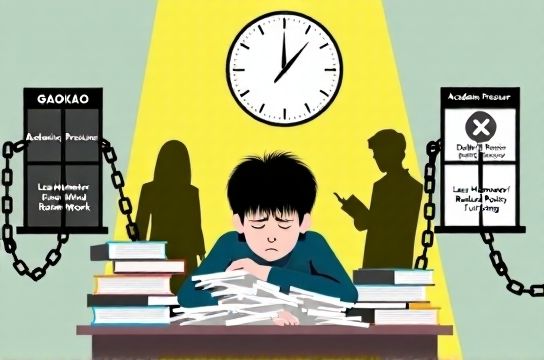
At the heart of this pressure cooker is the gaokao — China’s National College Entrance Examination. Think of it as the SAT on steroids, but with higher stakes. Over 10 million students take the gaokao each year, and their scores determine which university they can attend — if any. Elite schools like Tsinghua and Peking University accept less than 2% of applicants. That’s tougher than Harvard.
But it’s not just the test. It’s the years of grinding prep, the 6 a.m. study sessions, the mountain of homework, and the cultural weight of family expectations. In many families, a child’s academic success is seen as the key to lifting the entire household into the middle class — or keeping them there.
The Numbers Don’t Lie
Let’s break it down with some real data:
| Statistic | Data |
|---|---|
| Average Study Hours per Day (High School) | 9–11 hours |
| Annual Gaokao Test-Takers | ~12 million (2023) |
| Top 1% Gaokao Score Cutoff (Beijing) | 650+/750 |
| University Enrollment Rate (2023) | ~60% |
| Peking University Acceptance Rate | ~1.5% |
And it starts early. By middle school, many kids are already enrolled in after-school tutoring — sometimes spending more time in cram schools than in regular class. A 2021 survey found that urban families spend an average of $2,500 USD annually on private tutoring. That’s a huge burden, especially for rural families.
The Mental Health Toll
All this pressure takes a serious psychological toll. According to a 2022 study published in The Lancet, nearly 25% of Chinese adolescents show symptoms of depression, with academic stress being the top contributor. Suicide is the leading cause of death among teens aged 15–24 in China — a heartbreaking reality linked directly to school pressure.
The government hasn’t stayed silent. In 2021, China launched the 'Double Reduction' policy, banning for-profit tutoring in core subjects and limiting homework. But while well-intentioned, results have been mixed. Many parents simply moved tutoring underground — trading Zoom links and cash payments to keep their kids ahead.
Cultural Roots Run Deep
This obsession with education isn’t new. It traces back over 1,300 years to the imperial examination system, where scholars competed for government jobs through grueling written tests. Passing meant power, prestige, and upward mobility. Today, the gaokao is the modern version — a meritocratic ideal in a rapidly changing society.
Yet, is it still fair? Rural students often lack access to quality teachers, internet, and tutoring. In 2023, only 12% of rural students made it to four-year universities, compared to 60% in major cities. That gap reveals a system that rewards privilege as much as effort.
What’s Next?
Reform is slow, but change is coming. Some provinces are experimenting with multiple admissions pathways, including talent-based and holistic evaluations. Universities are also placing more weight on extracurriculars and personal statements — small steps toward balance.
Still, until broader societal values shift — where success isn’t measured solely by test scores — the pressure won’t truly ease. For now, millions of students will keep studying late into the night, chasing a dream shaped by history, hope, and heavy expectations.