
Chinese Youth Culture and Social Change Today
- Date:
- Views:253
- Source:The Silk Road Echo
In today’s fast-evolving China, youth culture isn’t just about fashion or music—it’s a powerful force reshaping society. From digital natives dominating social media to post-90s and post-00s generations redefining work-life balance, Chinese young people are steering the nation toward a new cultural frontier.
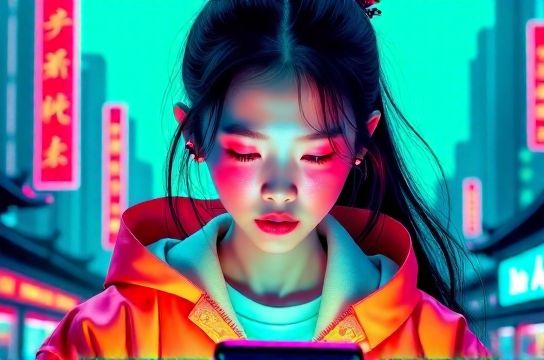
Gone are the days when success meant a stable job and early marriage. A 2023 survey by iResearch showed that over 62% of Chinese youth aged 18–35 prioritize personal fulfillment over traditional career paths. This shift is evident in the rise of 'slash careers'—individuals identifying as, say, a designer/YouTuber/entrepreneur—all at once.
Social media platforms like Xiaohongshu (Little Red Book) and Bilibili have become cultural incubators. Take Bilibili: it boasts over 300 million monthly active users, with 77% under 24. These platforms aren’t just for entertainment—they’re spaces for identity exploration, activism, and niche communities, from Hanfu revivalists to indie musicians.
One fascinating trend? The neijuan (involution) vs. taotai (lying flat) debate. While neijuan describes the rat race of overworking, taotai represents a quiet resistance—choosing minimalism and mental well-being. Yet, it’s not all rebellion. Many youth embrace ‘selective hustle,’ focusing energy on passions rather than societal pressure.
Economically, Gen Z spends differently. They value experiences over possessions, driving growth in travel, esports, and online content. According to McKinsey, Chinese youth account for 45% of luxury spending despite making up only 20% of the population—proof of their purchasing power and brand consciousness.
Youth Lifestyle Trends at a Glance
| Trend | Description | Key Statistic |
|---|---|---|
| Digital Natives | Grow up with smartphones and high-speed internet | 98% of urban youth use mobile internet daily (CNNIC, 2023) |
| Lying Flat (Taotai) | Rejecting excessive competition for simpler life | 41% of surveyed youth admit practicing some form of taotai (Pew Research) |
| Hanfu Revival | Wearing traditional Chinese attire as cultural pride | Market size: $1.4B, growing at 20% YoY (iiMedia) |
| Solo Consumption | Rise of single-person dining, travel, and housing | Over 100M singles live alone in major cities |
Culturally, there’s a strong pull toward heritage blended with modernity. Hanfu festivals draw tens of thousands; guochao (national trend) brands like Li-Ning and Pechoin merge tradition with streetwear aesthetics, resonating deeply with youth seeking authentic identity.
Yet challenges remain. High housing costs, job market saturation, and parental expectations create tension. But instead of conforming, many choose delayed marriage or opt out entirely—only 26% of women aged 20–35 plan to marry before 30 (National Bureau of Statistics).
In essence, Chinese youth aren’t just adapting to change—they’re leading it. Their values—authenticity, flexibility, and self-expression—are quietly rewriting the social contract. As one Bilibili vlogger put it: “We’re not lazy. We’re just building a life that feels real.”