
Green Tea Girls and Internet Stereotypes in China
- Date:
- Views:401
- Source:The Silk Road Echo
In the ever-evolving world of Chinese internet culture, few terms have sparked as much debate — and fascination — as the phrase green tea girl. No, it’s not a compliment about someone’s love for herbal beverages. Instead, it’s a loaded label wrapped in irony, judgment, and social commentary. So, what exactly is a green tea girl? And why does this stereotype continue to dominate online conversations?
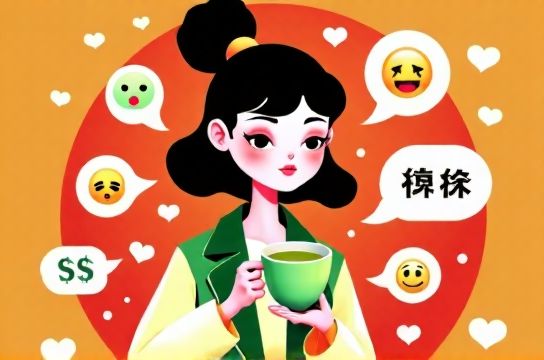
What Is a 'Green Tea Girl'?
The term ‘green tea girl’ (绿茶女, lǜchá nǚ) refers to a woman who appears sweet, innocent, and delicate on the surface but is perceived as manipulative, attention-seeking, or two-faced behind closed doors. Think of her as the 'sweet poison' of social dynamics — she sips jasmine tea while subtly stirring drama.
Originating from early 2010s Chinese forums, the label gained traction on platforms like Weibo and Douban. It's often used to critique women who play the victim, flirt strategically with men (especially those already in relationships), or use emotional manipulation to gain advantages.
Why Does This Stereotype Stick?
Stereotypes thrive where ambiguity exists — and gender roles in modern China are anything but clear-cut. As urbanization accelerates and traditional values clash with individualism, the 'green tea girl' becomes a scapegoat for broader anxieties about authenticity, femininity, and power.
A 2022 survey by Peking University’s Institute of Sociology found that 68% of respondents aged 18–35 had heard or used the term, with over half associating it with 'false modesty' or 'calculated charm.'
| Perception of 'Green Tea Girl' | Percentage of Respondents | Common Associated Traits |
|---|---|---|
| Manipulative but charming | 54% | Flattery, passive aggression, emotional leverage |
| Innocent and misunderstood | 19% | Natural shyness, misread intentions |
| Social media persona only | 27% | Carefully curated images, influencer behavior |
From Mockery to Misogyny?
Here’s where it gets tricky. While some use the term humorously, others weaponize it. Calling someone a 'green tea girl' can quickly shift from light teasing to character assassination — especially online, where nuance dies fast.
Feminist scholars argue that such labels police women’s behavior more harshly than men’s. A man might be called 'smooth' or 'charming' for similar actions, while a woman is labeled deceitful. It’s a double standard steeped in cultural expectations of how women 'should' act — pure, selfless, and transparent.
Pop Culture & The Green Tea Aesthetic
Walk into any trendy café in Shanghai or Chengdu, and you’ll likely spot the 'green tea aesthetic' in full bloom: soft lighting, pastel outfits, oversized sun hats, and — of course — an Instagram-worthy tea cup in hand. Influencers lean into the look, blurring the line between satire and performance.
This visual language has even influenced fashion brands. According to Alibaba’s 2023 Lifestyle Report, searches for 'fresh and clean girl style' (a euphemism tied to the green tea image) rose by 140% year-on-year.
Final Thoughts: Beyond the Label
The 'green tea girl' isn’t just a meme — it’s a mirror. She reflects our insecurities, our biases, and the messy contradictions of digital identity. Rather than dismissing women under this label, maybe it’s time to ask: Why do we need such categories at all?
In a society navigating rapid change, reducing people to stereotypes offers false clarity. But real understanding? That takes more than a sip of tea.