
Private Tutors and Education Inequality in China
- Date:
- Views:364
- Source:The Silk Road Echo
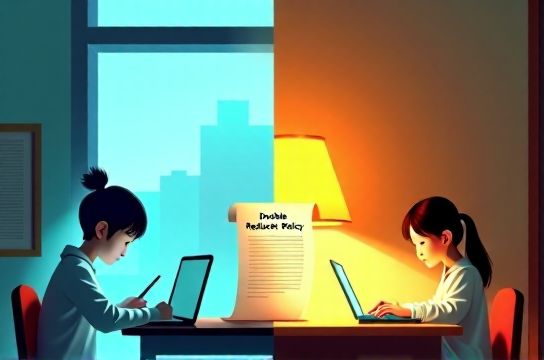
In recent years, the booming private tutoring industry in China has become a double-edged sword. On one hand, it offers personalized learning and academic support for millions of students; on the other, it deepens education inequality across urban and rural divides. Let’s dive into how after-school tutoring shapes China’s educational landscape — and who really benefits.
The Rise of Private Tutoring: By the Numbers
China’s private tutoring market was valued at over $100 billion in 2023, serving more than 70 million K-12 students. Major players like New Oriental and TAL Education have built empires catering to exam pressure, especially around the pivotal gaokao (national college entrance exam).
But here's the catch: access isn't equal. While urban families spend an average of 15–20% of their annual income on tutoring, many rural households can’t afford even basic sessions.
Urban vs. Rural: A Tale of Two Classrooms
To understand the gap, consider this comparison:
| Metric | Urban Students | Rural Students |
|---|---|---|
| Access to Online Tutoring | 86% | 34% |
| Avg. Monthly Spending (CNY) | 800 | 90 |
| Private Tutor Usage Rate | 68% | 19% |
| Internet Speed (Mbps) | 120 | 45 |
These disparities aren’t just about money — they’re about opportunity. High-speed internet, digital devices, and informed parents give city kids a leg up. Meanwhile, rural schools often lack qualified teachers, let alone access to premium tutoring platforms.
Policy Pushback: 'Double Reduction' and Its Impact
In 2021, China launched the "Double Reduction" policy to ease student burden and curb the tutoring boom. The rules limited homework, banned for-profit tutoring on core subjects during weekends, and restricted advertising.
Result? Big tutoring firms lost up to 80% of their market value, and thousands of tutoring centers shut down. But did it level the playing field?
Not quite. Wealthy families simply moved tutoring underground — hiring private tutors at home or using overseas online platforms. For poorer families, however, even affordable group classes vanished.
The Hidden Cost of 'Educational Arbitrage'
What we’re seeing is a form of educational arbitrage: those with resources find loopholes, while others fall further behind. A 2023 study found that post-policy, the performance gap between top and bottom income quartiles widened by 12% in math and science.
And let’s not forget teacher dynamics. Some public school teachers moonlight as private tutors, creating conflicts of interest. Others report students in tutoring-heavy cities being over-coached but under-thought — great at memorization, weak in critical thinking.
What’s the Way Forward?
Solving this requires more than bans. Real change means investing in rural education, improving teacher distribution, and expanding free, high-quality digital learning platforms like “National Cloud Platform for Education”.
Pilot programs in provinces like Sichuan show promise: when rural schools get stable internet and AI-assisted tutoring, student performance jumps by up to 25%.
Ultimately, education shouldn’t be a privilege for those who can pay. If China wants true equity, it must tackle the root causes — not just the symptoms.