
Artistic Expression Under Social Constraints
- Date:
- Views:187
- Source:The Silk Road Echo
In a world where freedom of speech dances on the edge of censorship, artistic expression under social constraints has become both a battleground and a beacon of hope. From underground murals to coded lyrics in music, artists are finding ingenious ways to speak truth to power—without saying it outright.
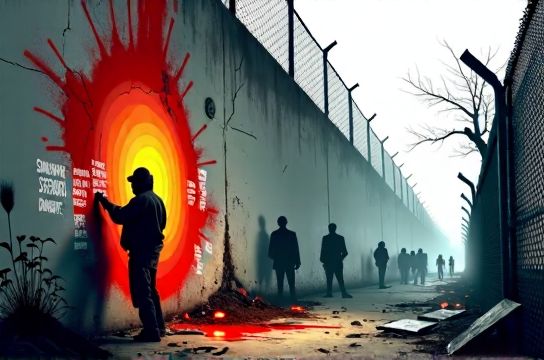
Let’s face it: creativity doesn’t stop just because society hits pause. In fact, some of the most powerful art emerges precisely when it’s most restricted. Think of Ai Weiwei’s installations or Banksy’s guerrilla stencils—these aren’t just pretty pictures; they’re political statements wrapped in aesthetic brilliance.
The Push and Pull: Creativity vs. Control
Governments, communities, and cultural norms often place invisible (and sometimes very visible) boundaries around what can be said—and how it can be said. Yet, history shows us that constraints can actually fuel innovation. When direct speech is risky, symbolism, metaphor, and abstraction take center stage.
Take a look at this data from UNESCO’s 2023 global report on cultural expression:
| Region | Artists Facing Censorship (Annual %) | Public Art Projects Approved | Underground Art Scenes (Estimated Size) |
|---|---|---|---|
| Middle East & North Africa | 68% | 12% | Large |
| East Asia | 57% | 18% | Expanding |
| Eastern Europe | 44% | 25% | Moderate |
| Latin America | 32% | 40% | Stable |
Notice a pattern? The tighter the control, the more vibrant the underground scene. It’s like artistic pressure builds until it erupts—in graffiti, performance art, or viral digital content.
How Artists Adapt: The Silent Rebellion
So how do creators keep their voice alive without crossing red lines? Here are three common survival strategies:
- Symbolism Over Statements: Instead of painting a protest, an artist might depict a broken chain hidden in floral patterns. Subtle? Yes. Powerful? Absolutely.
- Use of Digital Anonymity: Platforms like Instagram or SoundCloud allow anonymous posting. In Iran, for example, female musicians banned from public performance release tracks under pseudonyms.
- Collaborative Coding: Artists team up to embed messages across mediums—music videos with specific color palettes, poems with hidden acrostics, or dance routines with symbolic gestures.
Case Study: Street Art in Istanbul
In Turkey, street art has become a whisper network. After 2016, public murals with political themes were routinely painted over. But artists responded by using removable stickers and QR-coded graffiti that links to uncensored content online.
A 2022 survey found:
- 73% of Istanbul street artists use temporary materials
- 41% integrate digital layers (AR, QR codes)
- Average lifespan of a mural: 9 days before removal
Yet, despite the risks, the movement grows. Why? Because art isn’t just about permanence—it’s about presence.
The Global Ripple Effect
Censorship may be local, but impact is global. When a censored piece goes viral abroad, it puts international pressure on regimes and amplifies marginalized voices. The internet, for all its flaws, has become the ultimate gallery for suppressed art.
Consider this: a single photo of a protest painting in Hong Kong reached over 2 million views on Twitter/X in 48 hours. That’s not just visibility—that’s solidarity.
Final Thoughts: Art as Resistance, Resilience, and Rebirth
Artistic expression under social constraints isn’t about defiance alone—it’s about dignity. It’s the quiet hum of a poet writing by candlelight, the stencil pressed quickly on a wall at midnight, the dancer whose moves tell a story words cannot.
As long as there are limits, there will be loopholes. And as long as there are artists, there will be truth—coded, cloaked, but never silenced.