
Air Pollution and Public Response in China
- Date:
- Views:204
- Source:The Silk Road Echo
Let’s be real — if you’ve spent time in Beijing, Shanghai, or even smaller cities across China, you’ve probably woken up to that hazy gray sky and thought, ‘Is it fog… or is it *smog*?’ Spoiler: It’s smog. And over the past two decades, air pollution in China hasn’t just been a weather report footnote — it’s become a full-blown public health crisis that sparked a nationwide wake-up call.
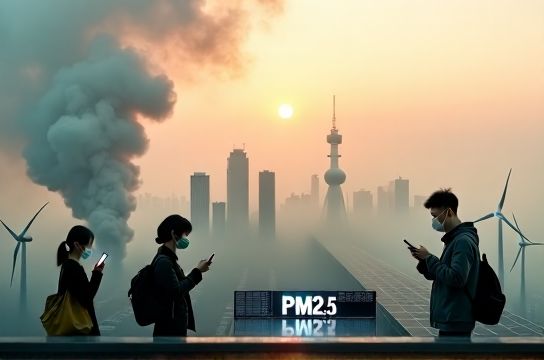
Back in the early 2010s, China was burning coal like there was no tomorrow. Literally. In 2013, Beijing’s annual average PM2.5 level hit a jaw-dropping 89.5 micrograms per cubic meter — nearly nine times the WHO’s recommended safe limit of 10 µg/m³. People started calling it the ‘airpocalypse.’ Masks sold out. Parents checked AQI (Air Quality Index) apps like they were stock prices. And for the first time, ordinary citizens weren’t just complaining — they were demanding change.
The government responded — not overnight, but with serious muscle. Enter China’s War on Pollution, launched officially in 2014. Fast forward to today, and the results? Actually impressive.
Progress You Can Breathe: The Numbers Don’t Lie
Check out this snapshot of how key cities have cleaned up their act:
| City | PM2.5 (2013, µg/m³) | PM2.5 (2022, µg/m³) | Reduction |
|---|---|---|---|
| Beijing | 89.5 | 30.7 | 66% |
| Shanghai | 62 | 29.2 | 53% |
| Guangzhou | 53 | 22.8 | 57% |
| Shenzhen | 48 | 18.4 | 62% |
Yeah, you read that right — Beijing slashed its PM2.5 by two-thirds in under a decade. How? A mix of heavy lifting: shutting down dirty factories, pushing electric vehicles (China now builds over half the world’s EVs), expanding solar and wind power, and even relocating entire industrial zones.
But Here’s the Twist: Public Awareness Was the Game-Changer
Governments make policies, but people make movements. What made China’s turnaround different was the surge in public engagement. Remember when Apple’s Beijing Air Quality app went viral? Or when documentaries like Under the Dome (watched over 150 million times before being censored) put pollution on every dinner table?
Social media exploded with #MyBlueSky posts. Citizens used low-cost sensors to crowdsource pollution data. Schools canceled outdoor activities. Hospitals reported spikes in respiratory cases. The message was clear: clean air isn’t a luxury — it’s a right.
What’s Next? The Road Ahead
China still faces challenges — especially in rural areas and winter heating seasons. But the trend is undeniable. In 2023, over 87% of Chinese cities met national air quality standards, up from just 40% in 2013.
The takeaway? When policy meets public pressure, change happens. China’s air may not be perfect yet, but it’s proof that even the dirtiest skies can clear — one breath at a time.