
Rural Migration and Urban Challenges in China
- Date:
- Views:242
- Source:The Silk Road Echo
In recent decades, China has witnessed one of the most massive rural-to-urban migrations in human history. As factories boom and cities expand, millions have left behind farm life in search of better wages, education, and opportunities. But this great shift hasn’t come without cost. Behind the glittering skyscrapers and bustling subways lies a complex web of social, economic, and environmental challenges.
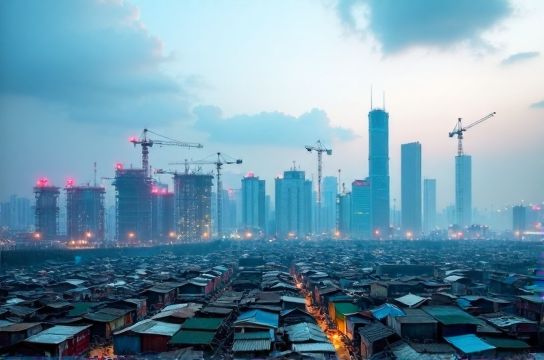
The Scale of Movement: By the Numbers
Since the 1980s, over 300 million people have migrated from rural villages to urban centers. According to China’s National Bureau of Statistics (2023), about 18.7% of the urban population are migrant workers without local household registration (hukou). This system restricts access to public services like healthcare, schooling, and affordable housing.
| Year | Migrant Population (Million) | Urbanization Rate (%) |
|---|---|---|
| 2000 | 144 | 36.2 |
| 2010 | 221 | 49.7 |
| 2020 | 376 | 63.9 |
| 2023 | 385 | 65.2 |
That’s right—China’s urban population now exceeds 900 million. And while cities like Shenzhen and Hangzhou thrive as tech hubs, the pressure on infrastructure is real.
The Human Side: Dreams vs. Reality
Many migrants work long hours in construction, delivery, or manufacturing for wages far below their urban-born peers. A 2022 survey found the average monthly income for rural migrants was ¥5,050 (~$700), compared to ¥8,500 for locals in first-tier cities. Worse, nearly 60% of migrant children can’t attend public schools near their parents due to hukou restrictions.
“I came to Shanghai to give my son a better future,” says Li Wei, a construction worker from Anhui. “But he’s back home with my parents. I only see him twice a year.” Stories like Li’s are heartbreakingly common.
Cities Under Pressure
Rapid migration has strained everything: housing, transport, water, and waste systems. Take Beijing—its groundwater levels dropped by 3 meters per decade due to overuse. Meanwhile, traffic congestion costs Chinese cities an estimated $120 billion annually in lost productivity.
And let’s talk pollution. While coal use has declined, urban air quality remains a concern. In 2023, only 30% of major cities met national PM2.5 standards.
Policies Trying to Catch Up
The government hasn’t been idle. Reforms aim to relax hukou rules in small and medium cities. Over 100 million people have gained urban residency since 2014. Plus, China’s New-Type Urbanization Plan (2021–2035) pushes for greener, more inclusive cities.
Still, progress is uneven. Tier-1 cities like Beijing and Shanghai remain tightly controlled. Without full integration, many migrants remain second-class citizens in the very cities they help build.
The Road Ahead
Sustainable urban growth means more than just taller buildings. It requires fair policies, upgraded infrastructure, and social inclusion. Rural migrants aren’t just labor—they’re families, dreamers, and vital threads in China’s urban fabric.
As China moves toward becoming a fully modernized society by 2035, how it treats its migrant population may well define its soul.