
The Evolution of Family Values in China
- Date:
- Views:248
- Source:The Silk Road Echo
China's family values have undergone a fascinating transformation over the past century — from Confucian traditions to modern urban dynamics. Today’s Chinese families balance ancient respect for elders with new ideals of individualism, love-based marriage, and gender equality.
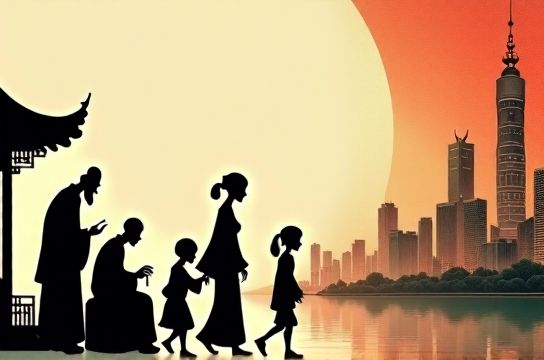
The Roots: Traditional Family Values
For thousands of years, Chinese society revolved around Confucian principles: filial piety (xiào), hierarchy, and duty. The family was not just emotional but economic — multi-generational households were the norm, with sons expected to care for aging parents.
| Aspect | Traditional (Pre-1950s) | Modern (Post-2000s) |
|---|---|---|
| Family Structure | Extended families (3+ generations) | Nuclear families (parents + 1 child) |
| Marriage | Arranged, duty-based | Love-based, personal choice |
| Fertility Rate | ~6 children per woman (1950) | 1.3 (2023, World Bank) |
| Elder Care | Children’s responsibility | Mixed: family + state/senior homes |
The One-Child Policy & Its Ripple Effects
Introduced in 1979, the one-child policy reshaped family dynamics overnight. Suddenly, millions of children became ‘little emperors’ — doted on by two parents and four grandparents. This created intense pressure for academic success and fueled a booming private education market.
But it also led to long-term challenges: an aging population and shrinking workforce. By 2035, over 30% of China’s population will be over 60 (UN estimate). That’s putting enormous strain on younger generations — and traditional family support systems.
Urbanization and Changing Gender Roles
As people moved to cities, old village-based kinship networks faded. Urban couples often live far from parents, making daily caregiving impossible. At the same time, women’s roles have evolved dramatically. In major cities like Shanghai and Beijing, over 70% of women participate in the workforce (World Bank, 2022).
Yet expectations remain mixed. Many still face the ‘double burden’: working full-time while managing household duties. Surveys show that only 38% of men share equal housework responsibilities (Pew Research, 2021).
Marriage: From Duty to Desire?
Marriage rates are dropping fast. In 2022, China saw its lowest marriage rate in decades — just 4.8 per 1,000 people (National Bureau of Statistics). Young people delay or avoid marriage due to high housing costs, job insecurity, and changing attitudes toward independence.
Especially among women, there’s growing pride in being single. The term ‘leftover women’ (sheng nü) — once used negatively — is now reclaimed as a symbol of empowerment.
The Future: Blending Old and New
Despite rapid change, core values endure. Respect for elders remains strong — even if expressed differently. Video calls replace nightly dinners, but WeChat red packets still flow during Lunar New Year.
And while nuclear families dominate, there’s renewed interest in intergenerational living, especially as elder care becomes more challenging. Some cities now offer tax incentives for adult children who co-reside with parents.
In short, Chinese family values aren’t disappearing — they’re adapting. Like bamboo, they bend without breaking, rooted in tradition yet swaying with the winds of modernity.