
Education Competition Among Chinese Families
- Date:
- Views:279
- Source:The Silk Road Echo
In today’s China, education isn’t just about learning—it’s a battlefield. Behind every child’s backpack lies a fierce race fueled by parental ambition, societal pressure, and sky-high expectations. Welcome to the world of education competition among Chinese families, where getting into a top school can feel like winning the Olympics.
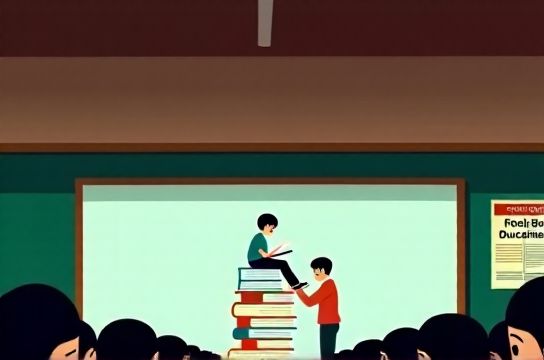
The Pressure Cooker: Why Education Matters So Much
In China, academic success is seen as the golden ticket to a better life. With over 10 million students taking the Gaokao (China’s national college entrance exam) each year, the stakes are astronomical. A high score doesn’t just mean university admission—it can define your career, income, and even marriage prospects.
Families invest heavily, both emotionally and financially. According to a 2023 survey by iResearch, urban Chinese parents spend an average of ¥38,000 (~$5,300 USD) per year on after-school tutoring and enrichment programs for one child. That’s more than the annual GDP per capita in some developing countries!
The Hidden Cost of Excellence
But what does this relentless pursuit cost? Let’s break it down:
| Expense Category | Avg. Annual Cost (RMB) | Share of Family Income* |
|---|---|---|
| After-School Tutoring | 24,000 | 18% |
| Private Schools | 60,000 | 45% |
| Study Tours & Camps | 15,000 | 11% |
| Online Learning Platforms | 5,000 | 4% |
*Based on average urban dual-income household income of ¥133,000/year
And it’s not just money—time is another currency. Parents often rearrange work schedules, hire tutors, or even relocate to secure access to elite schools. In Beijing, homes near top-tier primary schools can cost up to 3x more per square meter than comparable properties elsewhere—a phenomenon known as “school-district housing” fever.
The Gaokao: One Test to Rule Them All
No discussion of Chinese education is complete without mentioning the Gaokao. This two-day exam determines everything. Students prepare for years, often attending extra classes on weekends and holidays. The pressure is so intense that hospitals report spikes in anxiety-related visits during exam season.
Here’s a snapshot of recent Gaokao stats:
| Year | Test Takers (Million) | Top Tier Uni Admission Rate |
|---|---|---|
| 2021 | 10.78 | ~5.7% |
| 2022 | 11.93 | ~5.2% |
| 2023 | 12.91 | ~4.8% |
Yes, you read that right—the odds of getting into a top university are dropping as competition heats up.
Is Change Coming?
Recognizing the toll, the government launched the 'Double Reduction' policy in 2021, banning for-profit tutoring in core subjects and limiting homework. While well-intentioned, many families have simply shifted spending underground—private tutors at home, online classes from overseas platforms, or 'study consultants' rebranded as 'life coaches.'
Still, there are signs of hope. More parents are embracing holistic development, exploring arts, sports, and international curricula. Some are even opting for international schools or studying abroad, with over 700,000 Chinese students enrolled overseas in 2023.
Final Thoughts
Education competition in China isn’t going away—but its shape may evolve. As mental health awareness grows and alternative pathways gain traction, families might finally find balance between ambition and well-being. Until then, the race continues, one textbook at a time.