
How Education Shapes Chinese Society Today
- Date:
- Views:273
- Source:The Silk Road Echo
In today’s China, education isn’t just about textbooks and exams—it’s the engine driving social mobility, economic growth, and cultural transformation. From the bustling classrooms of Beijing to rural villages in Yunnan, the pursuit of knowledge is reshaping lives and redefining what it means to succeed.
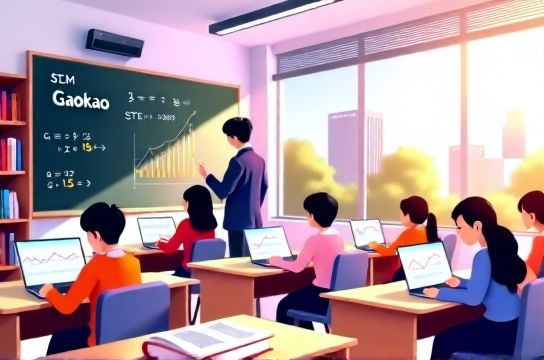
Let’s face it: the Chinese education system is intense. But behind the long study hours and fierce competition lies a powerful belief—education equals opportunity. And data backs this up. In 2023, over 96% of Chinese youth completed senior secondary education, up from just 40% two decades ago (UNESCO). That’s not just progress; that’s a revolution.
The Numbers Don’t Lie: Education & Economic Mobility
One of the most compelling ways education shapes society is through income potential. Consider this: university graduates in China earn, on average, 67% more than their peers with only high school diplomas (World Bank, 2022). It’s no wonder families invest heavily—sometimes sacrificing years of savings—to send their kids to college.
| Educational Level | Average Monthly Income (CNY) | Unemployment Rate (%) |
|---|---|---|
| Less than High School | 3,200 | 6.8 |
| High School Graduate | 4,500 | 5.1 |
| Bachelor's Degree | 8,900 | 2.3 |
| Master's or Higher | 12,600 | 1.7 |
This table says it all: the higher the degree, the brighter the future. But it’s not just about money. Education fuels innovation. In 2023, China produced over 1.1 million STEM graduates—more than any other country. These are the engineers, coders, and scientists building smart cities and launching satellites.
Breaking Barriers: Gender & Equality
Here’s a feel-good twist: education is helping close gender gaps. In urban areas, young women now outnumber men in universities. According to China’s Ministry of Education, female enrollment in higher ed hit 54.7% in 2023. That’s not just equality—it’s empowerment.
But challenges remain. In rural regions, access is still unequal. Only about 68% of rural students make it to high school, compared to over 95% in cities. The government’s ‘Double Reduction’ policy aims to fix this by cutting tutoring costs and improving public schools—but progress is slow.
Cultural Shifts: From Memorization to Innovation
Gone are the days when rote learning ruled. Today’s classrooms emphasize critical thinking and creativity. Schools are integrating AI labs, coding bootcamps, and even emotional intelligence training. Why? Because China isn’t just making workers—it’s cultivating innovators.
And let’s talk about the Gaokao—the national college entrance exam. It’s legendary. Over 12 million students took it in 2024. For many, it’s a once-in-a-lifetime shot at changing their destiny. Pass, and you might land in Tsinghua or Peking University. Fail, and the road gets steeper.
Looking Ahead
Education in China isn’t perfect. Pressure is high, inequality lingers, and mental health concerns are rising. But one thing’s clear: it’s the backbone of modern Chinese society. As President Xi once said, ‘Education is the cornerstone of national rejuvenation.’ And right now, that cornerstone is holding up a rapidly evolving nation.
So whether you’re a student grinding through late-night study sessions or a parent saving every yuan for tuition, remember: you’re part of something bigger. You’re shaping China’s future—one lesson at a time.