
Social Phenomena China Seen From University Campuses
- Date:
- Views:192
- Source:The Silk Road Echo
China's universities aren't just classrooms and dorms—they're living labs of social change. Walk through any campus from Tsinghua to Zhejiang University, and you'll spot more than students with books: you're seeing the future of Chinese society unfolding in real time.
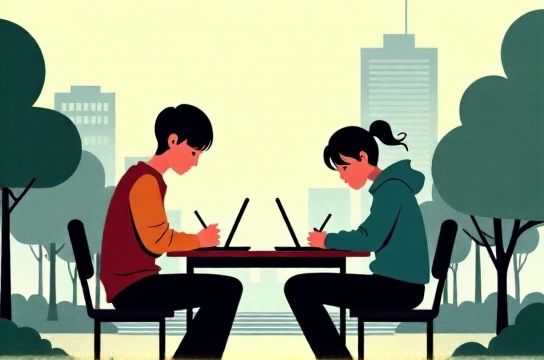
Take the 'involution' trend—known as neijuan (内卷). It’s not just academic pressure; it’s a full-blown cultural shift. Students pull all-nighters, overload courses, and compete for internships like Olympic athletes. A 2023 survey by Peking University found that 78% of undergraduates feel constant academic stress, with over 60% averaging less than 6 hours of sleep. Yikes.
But here’s the twist: resistance is growing. Enter the 'lying flat' movement—tanping (躺平). It’s not laziness; it’s quiet rebellion. More students are choosing balance over burnout, opting for part-time gigs or creative side hustles instead of chasing corporate ladders. At Fudan University, student-run co-working spaces have surged by 40% since 2022.
Gender dynamics are shifting too. Female enrollment in STEM fields hit 45% in 2023, up from 32% a decade ago. Yet, only 28% of department heads are women. The gap? Real.
And let’s talk money. With tuition averaging ¥8,000–12,000/year, many students turn to digital gig work. Think Douyin content creation, freelance coding, or tutoring via apps like Yuanfudao. Over 55% of students now earn side income—up from 30% in 2019.
Key Campus Trends at a Glance
| Trend | Description | Data Source (2023) |
|---|---|---|
| Neijuan (Involution) | Hyper-competition in academics & jobs | 78% report high stress (PKU Survey) |
| Tanping (Lying Flat) | Rejection of overwork culture | 40% growth in alternative campus spaces |
| Female STEM Enrollment | Rising participation in science fields | 45% of STEM students are women |
| Student Side Hustles | Digital gig economy engagement | 55% earn supplemental income |
These campuses? They’re microcosms. What starts in lecture halls spreads to cities, workplaces, and policy debates. The tension between grinding hard and chilling out reflects a nation at a crossroads.
So next time you hear about Chinese youth 'giving up,' think again. They’re not disengaging—they’re redefining success. And that? That’s revolutionary.