
Exploring Chinese Society Through Gen Z Habits
- Date:
- Views:243
- Source:The Silk Road Echo
If you want to truly understand modern China, skip the history books for a sec and just watch what Gen Z is doing on their phones. Born between 1997 and 2012, China's young digital natives aren’t just shaping trends—they’re redefining society, one Douyin video at a time.
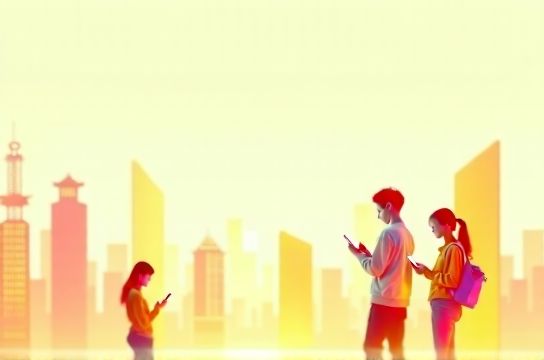
With over 260 million Gen Zers in China (source: National Bureau of Statistics), this generation holds massive economic and cultural influence. They’re the first to grow up fully immersed in mobile tech, e-commerce, and social media—all under a unique socio-political landscape that blends tradition with hyper-modernity.
Digital Natives Driving Digital Economy
China’s Gen Z spends an average of 3.5 hours daily on mobile apps—higher than any other age group. Platforms like Douyin (TikTok’s Chinese cousin), Bilibili, and Xiaohongshu aren’t just for entertainment; they’re lifestyle hubs where identity, shopping, and self-expression collide.
Take live-stream shopping: Gen Z accounts for nearly 55% of all live commerce buyers. In 2023, the total market hit ¥2.3 trillion (~$320 billion USD). That’s not just shopping—it’s performance art with a checkout button.
Cultural Shifts in Real Time
This generation is also quietly reshaping values. Unlike their parents’ focus on stability and conformity, many Gen Zers prioritize mental health, individuality, and work-life balance. Terms like "tang ping" (lying flat) and "neijuan" (involution) went viral as pushback against relentless competition.
Yet, it’s not all rebellion. There’s a strong wave of guochao—"national trend"—where youth proudly embrace local brands like Li-Ning, Huawei, and White Rabbit. It’s patriotism with a streetwear twist.
| Habit | Gen Z Adoption Rate | Key Platform |
|---|---|---|
| Live-stream Shopping | 58% | Taobao Live |
| Digital Payments | 96% | WeChat Pay / Alipay |
| Content Creation | 42% | Douyin / Xiaohongshu |
| Mental Health App Use | 35% | KnowYourself / Qingfan |
What This Means for Observers
Gen Z isn’t just consuming culture—they’re curating it. Their habits reflect a society balancing collectivism with self-expression, innovation with nostalgia. For marketers, educators, or policymakers, understanding this cohort is key to navigating China’s future.
So next time you scroll past a viral Hanfu dance on Douyin or see a teen unboxing a domestic sneaker collab, remember: you’re not just seeing a trend. You’re watching China evolve—in real time.