
Understanding Chinese Society Explained Through Daily Life
- Date:
- Views:275
- Source:The Silk Road Echo
Ever wondered what makes Chinese society tick? It’s not just about ancient temples and dumplings (though, let’s be real—those are awesome). To truly understand Chinese society, you’ve gotta dive into the everyday moments: morning tai chi in the park, the hustle of rush hour on a Beijing subway, or the chaotic symphony of a family dinner. These daily rituals aren’t just habits—they’re cultural DNA.
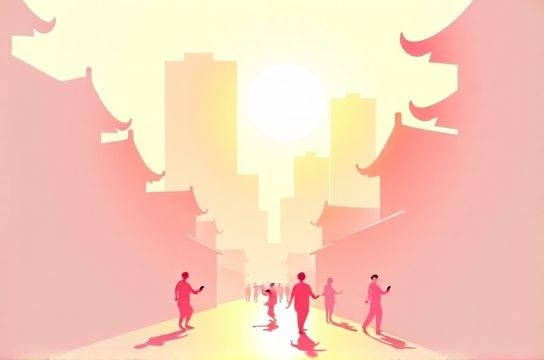
Take breakfast, for example. While you might grab a latte and a muffin, millions of Chinese start their day with congee, steamed buns, or savory soy milk. Why? Because food here isn’t fuel—it’s family, history, and comfort rolled into one bite.
But it’s not all poetic imagery. China’s rapid urbanization has reshaped how people live, work, and connect. In 1980, only 20% of Chinese lived in cities. Today? Over 65%. That’s over 900 million urban dwellers navigating high-speed commutes, digital payments, and sky-high expectations.
The Social Contract: Family, Face, and Future
In China, your identity is deeply tied to your family. The concept of “face” (mianzi) influences everything from business deals to birthday gifts. Lose face? Ouch. Save face? Smooth sailing. And don’t even get me started on the qinmi (intimate relationships) network—your guanxi (connections) can open doors faster than a VIP pass.
Here’s a snapshot of how daily life reflects broader societal values:
| Daily Habit | Cultural Meaning | Urban vs. Rural Prevalence |
|---|---|---|
| Morning group exercises | Community health & social bonding | 78% urban, 62% rural |
| Mobile payment usage | Digital trust & convenience | 92% urban, 45% rural |
| Multi-generational households | Family duty & economic support | 30% urban, 58% rural |
| Dining out frequency | Social status & leisure time | 4.2x/week urban, 1.8x/week rural |
Notice the gaps between city and countryside? That’s where policy meets reality. While urbanites scan QR codes for bike rentals, many rural areas still rely on cash and community credit.
Work, WeChat, and Wellbeing
Want to grasp modern Chinese life? Open WeChat. It’s not just an app—it’s a lifestyle. Pay bills, book doctor appointments, chat with coworkers, and order food—all without switching platforms. Over 1.3 billion users rely on it daily. That’s not convenience; it’s control.
And speaking of work: the infamous “996” schedule (9 am–9 pm, 6 days a week) may be controversial, but it reveals a deeper truth—ambition runs deep. Yet, younger generations are pushing back. Terms like “lying flat” (tang ping) and “let it rot” (bai lan) reflect growing fatigue with relentless hustle culture.
In short, Chinese society today is a balancing act: tradition vs. tech, collectivism vs. individualism, growth vs. wellbeing.
So next time you see someone doing tai chi at dawn or扫码 (scan to pay) without pulling out a wallet, remember—you’re not just witnessing routine. You’re seeing centuries of values evolving in real time.