
Youth Pressures in China's Competitive Society
- Date:
- Views:247
- Source:The Silk Road Echo
In today’s fast-paced China, young people are caught in a whirlwind of expectations, exams, and endless competition. From the moment they step into school, the pressure to succeed is relentless. We’re talking about a generation sprinting toward dreams while carrying the weight of family hopes, social standards, and economic uncertainty.
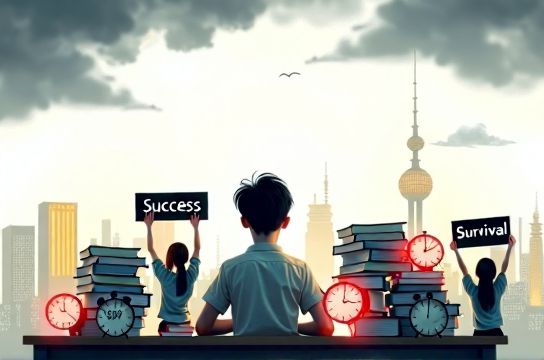
The Academic Grind: Gaokao and Beyond
It all starts with Gaokao, China’s national college entrance exam. This single test can define a student’s future. According to the Ministry of Education, over 12 million students took the Gaokao in 2023. Only about 40% made it into top-tier universities. That’s intense.
| Year | Total Gaokao Takers | Top University Admission Rate |
|---|---|---|
| 2021 | 10.78 million | 38% |
| 2022 | 11.93 million | 39% |
| 2023 | 12.05 million | 40% |
Students often study 12+ hours a day during senior year. Some schools even have ‘cages’—glass-walled classrooms—to prevent distractions. It’s not just studying; it’s survival.
The 996 Work Culture Trap
After surviving school, many youth face the corporate jungle. The infamous 996 work culture (9 AM to 9 PM, 6 days a week) still haunts tech hubs like Beijing and Shenzhen. A 2022 survey by Zhaopin.com found that nearly 60% of employees under 30 reported working overtime regularly. Burnout? Absolutely.
And for what? Average starting salary for grads in first-tier cities is around ¥8,000–¥12,000 ($1,100–$1,700) per month. But rent in Shanghai or Beijing can eat up half of that. No wonder so many call themselves “ant tribe”—struggling, invisible, and overworked.
Digital Pressure & Social Media
Social media adds another layer. Platforms like Xiaohongshu and Douyin glorify success stories—luxury bags, overseas trips, dream jobs. But behind the filters? Anxiety. A Peking University study found that 25% of Chinese youth show signs of depression, with social comparison being a top trigger.
Escaping the Rat Race?
Some are pushing back. The rise of “tang ping” (lying flat) and “neijuan” (involution) reflects a quiet rebellion. Young people are choosing simpler lives, rejecting endless hustle. Others turn to side gigs—freelancing, livestreaming, content creation—to regain control.
Still, systemic change is slow. Parents want stability. Society values prestige. And the job market? Brutally competitive. AI and automation could displace millions of entry-level roles by 2030, according to Goldman Sachs.
What Can Be Done?
- Mental health support: Schools and companies need better counseling services.
- Work-life balance reforms: Enforce labor laws and discourage 996.
- Redefine success: Celebrate diverse paths—not just Ivy League or high salaries.
China’s youth aren’t lazy—they’re exhausted. They’re not failing the system; the system might be failing them. But with awareness growing, there’s hope. Maybe one day, success won’t mean surviving—it’ll mean thriving.