
Rural-to-City Migration: The Hidden Lives of China’s Floating Population
- Date:
- Views:255
- Source:The Silk Road Echo
China's rapid urbanization has been nothing short of a modern miracle. But behind the gleaming skyscrapers and bullet trains lies a human story often overlooked—the floating population. These are the rural migrants who leave their hometowns in search of better jobs, education, and life in megacities like Beijing, Shanghai, and Shenzhen. Yet, despite powering China’s economic boom, they live in the shadows—unseen, underprotected, and often misunderstood.
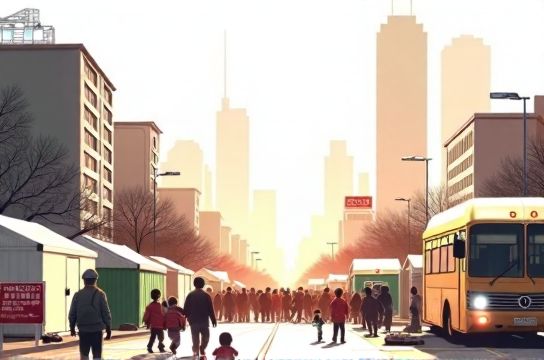
The Scale of Movement: By the Numbers
As of 2023, China’s floating population reached a staggering 385 million people, according to the National Bureau of Statistics. That’s more than the entire population of the United States, constantly on the move or living away from their registered household (hukou) location.
To put this into perspective, here’s a breakdown of migration trends over the past decade:
| Year | Floating Population (Million) | Primary Destinations | Average Monthly Income (CNY) |
|---|---|---|---|
| 2013 | 245 | Guangdong, Zhejiang, Jiangsu | 3,200 |
| 2018 | 286 | Beijing-Tianjin-Hebei, Yangtze Delta | 4,500 |
| 2023 | 385 | Pearl River Delta, Chengdu-Chongqing | 6,100 |
This isn’t just about numbers—it’s about dreams, survival, and systemic challenges.
Why Do They Move? The Push and Pull
Rural areas face limited job opportunities, outdated farming methods, and underfunded schools. Meanwhile, cities offer factories, construction gigs, delivery jobs, and the hope of upward mobility. For many, it’s not a choice—it’s necessity.
But here’s the catch: most migrants don’t have local hukou status. This ancient household registration system locks them out of public housing, full healthcare access, and urban schooling for their kids. Imagine working in Shanghai for 10 years but still being treated as an outsider.
Life in the Margins: Work, Wages, and Woes
Migrants dominate sectors like construction (over 80% of workers), ride-hailing, sanitation, and electronics assembly. Many live in cramped dormitories or informal settlements on city edges. A 2022 survey found that 62% of migrant families spend less than 30% of their income on rent—because they can’t afford more.
Yet, their contribution is undeniable. In Shenzhen, over 70% of the workforce are migrants. In Guangzhou, they make up nearly half the population. Without them, the city grinds to a halt.
The Children Left Behind—And Those Who Followed
About 60 million children are left in villages with grandparents while parents work in cities. But increasingly, families are bringing kids along—only to face another wall: school enrollment. In Beijing, only 35% of migrant children attend public schools. The rest go to underfunded private ones or return home to study.
Is Change Coming?
Some cities are relaxing hukou rules. Hangzhou and Chengdu now offer residency points for skilled laborers. Digital platforms like Alipay even track social credit to help migrants qualify. Still, progress is slow. Full integration remains a distant dream.
The floating population isn’t temporary—they’re the backbone of modern China. Recognizing their rights isn’t just fair; it’s essential for sustainable growth.
So next time you sip coffee in a Shanghai café or order from a quick-delivery app, remember: someone far from home made that convenience possible.