
Hukou and Inequality: The Invisible Walls Shaping Urban-Rural Divides
- Date:
- Views:296
- Source:The Silk Road Echo
Let’s talk about something that doesn’t make the headlines much outside China, but quietly shapes the lives of over a billion people — the hukou system. Sounds technical? It is — but its effects are deeply human. Think of hukou as your household registration card, kind of like a social ID tied to where you were born. But here’s the catch: it doesn’t just say where you’re from — it decides what opportunities you get.
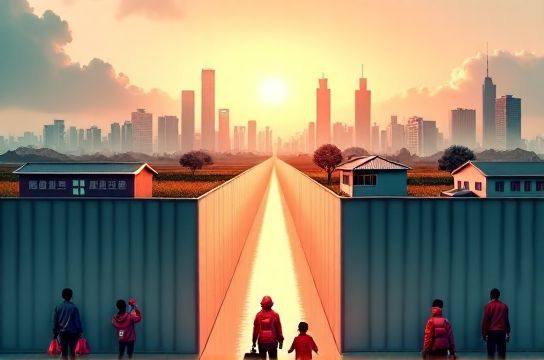
Imagine being stuck in a game where everyone starts with different power-ups based on their birthplace. If you have an urban hukou, you’re likely unlocking healthcare, good schools, housing benefits, and stable jobs. Rural hukou? Not so much. Even if you move to Shanghai or Beijing and work hard for years, you’re often treated as a 'temporary' resident. Your kids might not get into local schools. You might pay more for medical care. You’re basically living in the city, but never fully *part* of it.
This isn’t just unfair — it’s one of the biggest drivers of inequality in China. The urban-rural divide isn’t just about income (though that gap is huge). It’s about access. Education, healthcare, pensions — all locked behind this invisible wall called the hukou system.
And let’s be real: migration happens. Millions of rural workers head to cities every year for factory jobs, construction, delivery gigs — you name it. They keep the economy running. But they do it without the safety net city residents take for granted. They’re essential, yet excluded.
Some cities have started relaxing hukou rules, especially smaller ones desperate for young workers. But in top-tier cities? Forget it. The barriers stay high. Why? Infrastructure strain, budget limits, political resistance — sure, there are reasons. But the result is a two-tier society hiding in plain sight.
The good news? Awareness is growing. Researchers, activists, even some policymakers are pushing for reform. Full hukou equality won’t happen overnight, but small steps — like portable social benefits or residency-based access instead of hukou-based — could make a big difference.
So yeah, the hukou system isn’t just paperwork. It’s a legacy of control that still shapes who gets ahead and who gets left behind. If China wants true social mobility and balanced growth, tearing down these invisible walls isn’t optional — it’s urgent.