
How Social Media Is Shaping the Identity of China's Gen Z
- Date:
- Views:249
- Source:The Silk Road Echo
In today’s hyper-connected China, social media isn’t just for sharing selfies or viral dances—it’s a cultural force reshaping how Gen Z sees themselves and the world. Born between 1997 and 2012, China’s Generation Z is the first truly digital-native cohort, growing up with WeChat, Douyin (China’s TikTok), Xiaohongshu, and Weibo at their fingertips. These platforms aren’t just tools—they’re identity labs.
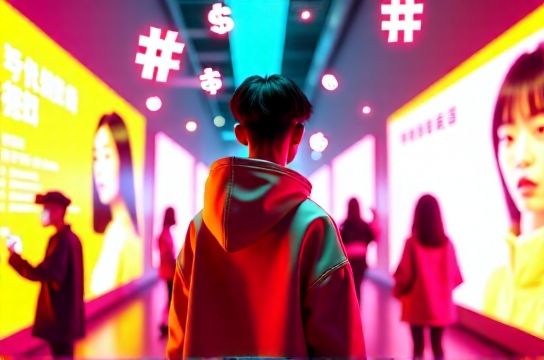
According to a 2023 report by QuestMobile, over 98% of Chinese users aged 15–30 use short-video apps daily, spending an average of 110 minutes per day on platforms like Douyin and Kuaishou. This constant digital immersion means that self-expression, peer validation, and even career aspirations are increasingly filtered through the lens of social media.
Take Xiaohongshu (Little Red Book), for example. Originally a platform for shopping reviews, it has evolved into a lifestyle hub where Gen Z curates everything from study routines to mental health journeys. A 2022 survey found that 63% of its active users are under 25, and 78% identify as female—highlighting how young women are leading the charge in redefining personal branding in China.
But it’s not all filters and fashion hauls. Social media has become a space for quiet rebellion and self-discovery. In a society where traditional expectations around education, marriage, and career remain strong, platforms offer a rare outlet for individuality. Hashtags like #反内卷 (anti-involution) and #躺平 (lying flat) gained millions of views, reflecting a growing pushback against societal pressure.
Here’s a snapshot of key platforms and their impact:
| Platform | Primary User Age | Daily Usage (Min) | Key Cultural Role |
|---|---|---|---|
| Douyin | 18–24 | 98 | Viral trends, talent showcase |
| Xiaohongshu | 18–29 | 75 | Lifestyle curation, authenticity |
| Bilibili | 16–25 | 82 | Niche communities, anime & academia |
| 20–30 | 60 | Public discourse, celebrity culture |
What makes this shift profound is how identity is no longer handed down—it’s built, shared, and constantly revised online. A student in Chengdu might gain fame for her calligraphy videos on Douyin, while a coder in Beijing shares his poetry on Bilibili. These acts aren’t just hobbies; they’re declarations of self in a world where being ‘different’ is slowly becoming the new normal.
Yet, challenges persist. Algorithmic echo chambers, cyberbullying, and the pressure to perform can take a toll. Still, for China’s Gen Z, social media remains a double-edged sword—one that cuts through tradition while carving out space for a more diverse, expressive future.