
Why China’s Only Children Are Redefining Family and Success
- Date:
- Views:225
- Source:The Silk Road Echo
In the shadow of towering skyscrapers and bustling tech hubs, a quiet revolution is unfolding—one raised not by crowds, but by single children. Born under China’s now-abolished one-child policy (1979–2016), over 180 million only children have grown into adulthood, reshaping cultural norms, economic trends, and definitions of success.
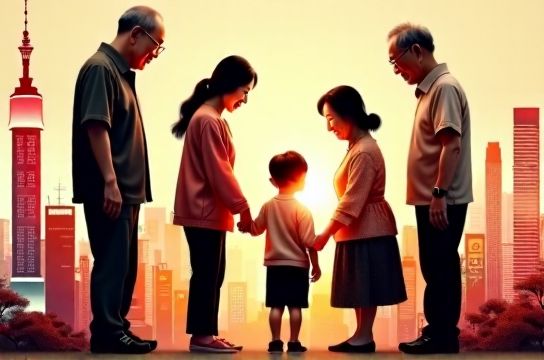
Growing up as the sole focus of four grandparents and two parents—what locals call the “4-2-1 family structure”—these individuals carry both privilege and pressure. A 2022 Peking University study found that only children are 32% more likely to attend university than peers with siblings, thanks to concentrated family investment. But this advantage comes at a cost: emotional isolation and sky-high expectations.
The Rise of the ‘Little Emperor’
Stereotyped as spoiled and self-centered, many only children were doted on relentlessly. Yet recent research paints a more nuanced picture. A longitudinal survey by the Chinese Academy of Social Sciences shows that urban only children score higher in self-esteem (+18%) and openness to experience, while being just as empathetic as non-only children when controlling for socioeconomic status.
| Metric | Only Children | With Siblings |
|---|---|---|
| University Enrollment Rate | 67% | 51% |
| Average Monthly Savings (Urban) | ¥6,200 | ¥4,800 |
| Homeownership by Age 30 | 41% | 29% |
| Self-Reported Life Satisfaction | 7.6/10 | 7.4/10 |
These stats reveal a generation thriving financially—but grappling with deeper questions about connection and care. As Liu Mei, a 31-year-old software engineer in Shenzhen, puts it: “I got everything I needed… but sometimes I wonder what it would’ve been like to have someone to share the burden.”
Redefining Success Beyond Salary
For many, success no longer means climbing the corporate ladder. A growing number are rejecting the 996 work culture (9 am–9 pm, 6 days a week) in favor of work-life balance. Platforms like Xiaohongshu (China’s Instagram) overflow with stories of only children launching creative startups, traveling solo, or prioritizing mental health.
And when it comes to family? Tradition is bending. Though filial piety remains strong, only children are pioneering new models—co-living arrangements for aging parents, digital caregiving apps, even foster sibling networks to combat loneliness.
Their journey isn’t just personal—it’s societal. As China faces an aging crisis and shrinking workforce, this generation holds the keys to reimagining kinship, responsibility, and what it means to live well—with or without a brother or sister by their side.