
The Rise of Wok Culture in Urban Food Markets
- Date:
- Views:207
- Source:The Silk Road Echo
If you've walked through a food hall in New York, London, or Seoul lately, you’ve probably smelled it before you saw it—charred onions, sizzling garlic, and that unmistakable smoky kiss known as wok hei. It’s not just nostalgia; it’s the rise of wok culture in urban food markets, and it’s reshaping how we think about fast, flavorful, and fresh eats.
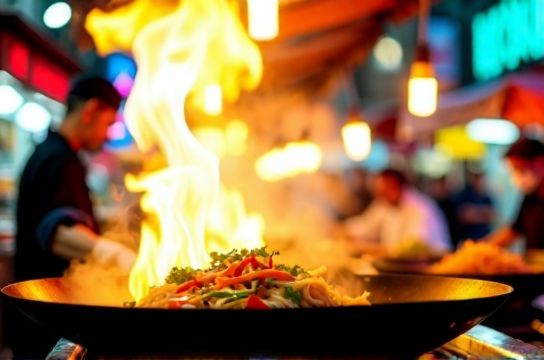
Once confined to family kitchens and late-night Chinese takeouts, the wok is now a centerpiece in trendy food halls and gourmet street food setups. Why? Because people crave authenticity, speed, and big flavor—all things a proper wok delivers in under five minutes.
Why Wok Cooking Is Dominating City Eateries
The science is simple: a carbon steel wok can reach temperatures over 700°F (371°C), creating rapid searing that locks in moisture while developing deep umami. Compare that to your average flat-top grill at most burger joints (usually around 400°F), and you start to see why chefs are switching gears.
But it’s not just chefs—consumers are voting with their stomachs. According to a 2023 National Street Food Report, Asian-inspired dishes grew by 34% in U.S. urban markets, with stir-fries leading the pack. That’s where wok cooking techniques shine brightest.
Wok vs. Standard Kitchen Equipment – A Performance Breakdown
Let’s put it on paper. Here’s how traditional wok cooking stacks up against common commercial kitchen methods:
| Feature | Traditional Wok (Gas-Heated) | Electric Griddle | Induction Pan |
|---|---|---|---|
| Max Temperature | 700°F (371°C) | 450°F (232°C) | 400°F (204°C) |
| Cook Time (Stir-Fry) | 3–5 min | 8–10 min | 9–12 min |
| Energy Efficiency | High (direct flame) | Medium | High |
| Flavor Development (Wok Hei) | Excellent | Poor | Fair |
As you can see, nothing replicates the intense heat cycling and flavor bloom of a real wok. And taste matters—especially when competing for attention in a crowded food market.
From Night Markets to Pop-Ups: Real-World Success
Take Wok On Fire, a pop-up in Brooklyn that started at $12K in monthly sales. After switching from induction to custom-built gas wok stations, they hit $48K within six months. Their secret? Authentic texture and aroma that customers literally line up for.
This isn’t isolated. Cities like Toronto and Melbourne now require at least one live-fire wok stall in new public market developments. Why? Because diners associate the sound, smell, and sight of a flaming wok with quality and freshness.
Mastering the Wok: Tips from the Pros
- Preheat aggressively: Your wok should smoke lightly before adding oil.
- Use high-smoke-point oils: Peanut or avocado oil work best.
- Keep ingredients prepped: Stir-frying is fast—no time for chopping mid-cook.
- Toss, don’t stir: Use the flick of the wrist to lift and fold food, not stir like a stew.
And if you're building a brand around this, lean into the theater of it. Customers don’t just want food—they want an experience. Flames flying, metal clanging, aromas swirling… that’s urban wok culture in action.
So whether you're a vendor, chef, or food lover, one thing’s clear: the wok isn’t making a comeback—it’s claiming its rightful place at the heart of city dining.