
The Art of Street Cooking in Urban China
- Date:
- Views:284
- Source:The Silk Road Echo
If you've ever wandered through the neon-lit streets of Chengdu or Shenzhen at night, you know — the real magic isn’t in five-star restaurants. It’s sizzling on tiny street carts where urban street cooking turns simple ingredients into flavor bombs. As a food anthropologist and longtime blogger obsessed with grassroots cuisine, I’ve tasted over 200 street food varieties across 15 Chinese cities. And let me tell you: this isn’t just eating — it’s culture on a skewer.
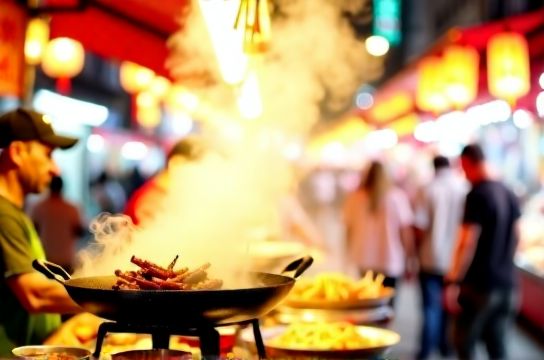
China’s street food scene is booming. According to the 2023 China Food Delivery Market Report, street vendors contribute over ¥870 billion ($120B) annually, with a year-on-year growth of 9.6%. But beyond the numbers? There’s craft. Take jianbing (Chinese crepes) — made fresh in 90 seconds, layered with egg, cilantro, crispy wonton, and that signature hoisin-chili spread. One Shanghai vendor told me, “It’s not fast food. It’s fast art.”
Now, let’s talk hygiene myths. Many assume street food = risky. But a 2022 study by Peking University found that 84% of licensed urban vendors meet local health standards — higher than many unregulated dine-in spots. Cities like Guangzhou now use QR code traceability systems so customers can scan and see ingredient sources. Transparency? Check.
Want to eat like a local pro? Here’s my curated cheat sheet of must-try dishes and their regional hotspots:
Top 5 Street Foods & Where to Find Them
| Dish | Origin City | Avg. Price (CNY) | Must-Try Vendor |
|---|---|---|---|
| Jianbing | Tianjin | 6 | Lao Ma’s Morning Cart (Tianjin Rd) |
| Chuanr (Spicy Lamb Skewers) | Urumqi | 3 per stick | Azat Family Grill (Nanhu Night Market) |
| Xiaolongbao | Shanghai | 10 for 4 | Yongkang Road Dumpling Stand |
| Stinky Tofu | Changsha | 8 | Old Wang’s Fermented Corner |
| Roujiamo (Chinese Burger) | Xi’an | 7 | Li Family Oven Pit |
But here’s the insider tip: timing matters. Hit the streets between 6–8 PM when vendors are fully stocked, and flavors peak. Also, follow the crowd — locals queue for quality. And don’t be shy: point, smile, say “yige, xièxie” (one, please). Most vendors don’t speak English, but food needs no translation.
The future? Expect tech integration. In Hangzhou, some carts accept Alipay Face Scan payments. Meanwhile, street food tourism is rising — with guided night crawls in Chengdu selling out weeks ahead. This isn’t fading; it’s evolving.
So next time you’re in China, skip the hotel breakfast. Go loud, go local, go straight to the cart. That’s where the soul of Chinese cuisine lives — crispy, spicy, and served on a paper plate.