
Daily Life in China Beyond Skyscrapers
- Date:
- Views:198
- Source:The Silk Road Echo
Hutongs are not relics. They’re living arteries — narrow lanes stitched together by gray brick, gable roofs, and the low hum of conversation drifting from open courtyard gates. In Beijing’s Dongcheng District, just 800 meters north of Wangfujing, a single hutong — Nanluoguxiang’s quieter cousin, Yandaixie — holds no souvenir stalls or selfie lights. Here, the morning begins not with WeChat Pay alerts, but with the rhythmic *thump-thump-thump* of dough being pounded for jianbing wrappers.
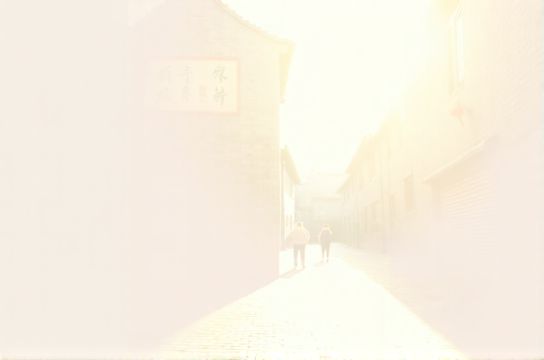
This isn’t curated ‘old Beijing’. It’s daily life in China — unscripted, unfiltered, and deeply rooted in routine.
The First Light: Breakfast as Ritual
At 6:15 a.m., Auntie Li unlocks her blue metal shutter on Yandaixie’s east alley. Her stall is two meters wide, anchored by a flat iron griddle, a stainless steel mixing bowl, and three glass jars: one for scallions, one for crispy fried wonton skins, one for fermented soybean paste (doubanjiang). She makes 47 jianbing per hour — each folded with precision, brushed with sauce, dusted with sesame, and wrapped in parchment. A full jianbing costs ¥8. A plain version (no egg, no meat) is ¥5.50. Cash still dominates here; only 30% of transactions use mobile payment, mostly from younger locals who’ve grown up with Alipay’s QR codes (Updated: May 2026).This is Chinese street food at its most functional: nourishing, fast, and calibrated to the worker’s commute. No fusion twists. No Instagram garnishes. Just batter, heat, and timing.
Nearby, a retired schoolteacher sips thick soy milk from a chipped porcelain cup while waiting for his steamed buns — plain mantou, not the sweet red-bean-filled ones tourists expect. He eats standing, leaning against a stone wall still bearing faded propaganda slogans from the 1970s. That wall isn’t heritage signage. It’s background noise — part of the texture he’s walked past for 42 years.
Local Markets China: Where Supply Chains End and Relationships Begin
By 8:30 a.m., the nearby Chaoyangmen Nei Subdistrict Market is in full swing. Not the glossy, air-conditioned supermarkets near Sanlitun, but a 1958-built concrete hall with exposed pipes, flickering fluorescent tubes, and 63 vendor stalls operating under handwritten price signs.This is where local markets China reveal their real logic: trust over labels. There’s no USDA grading on pork belly — just Uncle Zhao, who’s sold meat from the same counter since 1991, slicing cuts with a cleaver that’s been sharpened weekly for 35 years. He knows your mother’s preferences, your aunt’s diabetes, your nephew’s allergy to MSG. When you ask for ‘leaner than last time’, he nods and adjusts without hesitation.
Produce moves fast. Cabbage arrives at 4:30 a.m. via electric tricycle from Shunyi farms — 32 km away. It’s sold by weight (¥2.80/kg), but vendors often round down for regulars. Tomatoes are priced by ripeness tier: firm (¥4.20/kg), vine-ripened (¥5.60/kg), and ‘just-picked’ (¥6.80/kg, available only until 10:15 a.m.). No barcode scanners. Just a mechanical scale, chalk, and memory.
Fish? Sourced daily from Tongzhou wholesale docks. Vendor Lin keeps live carp in a shallow zinc tub fed by a hose running from the market’s central water line. She’ll gut and scale on-site for ¥2 extra — a service used by 87% of her customers (Updated: May 2026). No plastic packaging. Just newspaper wraps tied with twine.
The market closes at 2 p.m. — not because of regulation, but because inventory is gone, relationships are renewed, and the afternoon belongs to naps, mahjong, and tea.
Tea Culture China: Not Ceremony — Continuity Tea in the hutong isn’t served on lacquered trays with silk napkins. It’s poured from a stained white thermos into mismatched cups — some ceramic, some glass, one with a cartoon panda chipped off the rim. The blend is almost always jasmine green: Fujian-grown leaves scented with fresh blossoms, packed in vacuum-sealed foil pouches labeled ‘Fuzhou Tea Co., Est. 1953’.
But tea culture China lives in the repetition: the way Old Mr. Chen rinses his gaiwan three times before steeping, not for ritual purity, but because ‘the first rinse wakes the leaves — and me’. His steeping cycle? 30 seconds for infusion one, 45 for two, 60 for three — then he stops. ‘After three, it’s just hot water with memories.’
He drinks alone most days, seated on a bamboo stool outside his courtyard gate, watching children walk home from school. On weekends, neighbors gather. No host, no agenda. Someone brings extra cups. Someone else refills the thermos. Conversation drifts between property tax notices, grandson’s Gaokao prep, and whether the new dumpling shop on Gulou Donglu uses lard or vegetable oil. Tea is the constant — not the focus.
This is the difference between performance and practice. Tourist tea houses charge ¥128 for a 45-minute ‘ceremony’ with calligraphy scrolls and pipa music. Here, ¥28 buys a kilo of decent jasmine tea — enough for six weeks of quiet afternoons.
The Courtyard Pulse: Shared Space, Shared Rhythm
A Beijing siheyuan — a traditional courtyard home — isn’t a museum piece. In Yandaixie, most have been subdivided. One original structure now houses seven families across four levels, sharing two toilets, one laundry line strung between locust trees, and a single communal kitchen shed.Yet the courtyard remains the social OS. At noon, clotheslines transform into impromptu bulletin boards: notes pinned with clothespins — ‘Wang family moving out June 12’, ‘Found black wallet — ask at Gate 3’, ‘Free baby carrier, 6 months old, clean’. No apps. No WeChat groups. Just proximity and accountability.
Children play hopscotch on bricks laid in 1923. Teenagers lean against the east wing wall, earbuds in, scrolling Douyin — but when Auntie Ma calls out ‘Who left the faucet running?!’, they all look up, and someone shuts it. Not because they’re told, but because the sound carries. Acoustics enforce civility.
Even ‘lying flat’ — the much-discussed tang ping phenomenon — looks different here. It’s not nihilistic withdrawal. It’s Mr. Wu, 68, sitting on his stool every afternoon from 2:20–3:45 p.m., eyes closed, hands resting on his knees, breathing in sync with the pigeons circling the rooftops. He’s not unemployed. He’s retired from the Beijing Textile Institute. He’s not rejecting productivity — he’s redefining its unit of measure: breaths, not outputs.
Shopping Without the Scroll: Tourism Shopping vs. Daily Procurement
Tourism shopping in Beijing orbits around Wangfujing and Qianmen: silk scarves with QR-coded authenticity tags, jade pendants with English care instructions, miniature Forbidden City models made in Dongguan factories. It’s transactional. Fast. Disconnected.Local lifestyle China shopping is slower, tactile, and iterative. Consider fabric buying. At the small textile stall tucked behind the Dongsi Mosque, bolts of cotton, wool, and polyester sit side-by-side. No SKU numbers. Just handwritten tags: ‘Shandong cotton, medium weave, ¥38/m’, ‘Inner Mongolia wool blend, warm, ¥125/m’. Customers run fingers along edges, hold swatches to light, smell the dye. A dressmaker might buy 2.3 meters today, return Thursday for another 1.7, and come back Friday with a hemmed sleeve to check drape.
Same with hardware. The ‘Lucky Nail & Screw’ shop has no website, no delivery, and no English signage. Its inventory is organized by decade: 1980s-era brass hinges in Box A-7, 1990s metric-thread screws in Drawer 3C, post-2010 stainless steel brackets taped to the underside of the counter. Owner Mr. Gao doesn’t use inventory software. He uses a ledger bound in cracked black leather — updated daily in ballpoint pen.
This is tourism shopping’s inverse: not discovery, but continuity. Not novelty, but fidelity to what works.
| Feature | Hutong Daily Practice | Modern Urban Alternative | Trade-offs |
|---|---|---|---|
| Breakfast Access | Jianbing stall (5-min walk, ¥5.50–¥8) | Convenience store bento (3-min walk, ¥22, microwavable) | Hutong: fresher, cheaper, zero packaging. Urban: predictable timing, dietary labels, loyalty points. |
| Market Frequency | 2.3x/week average (produce + meat) | Supermarket trip 1.1x/week + instant delivery app orders (avg. 4.7x/week) | Hutong: stronger vendor relationships, seasonal awareness, physical activity. Urban: time savings, wider variety, allergy filters. |
| Tea Consumption | Self-served, bulk jasmine (¥28/kg, avg. 12g/day) | Specialty shop loose leaf (¥180/100g, matcha latte ¥36) | Hutong: lower cost, habitual integration. Urban: traceability, varietal education, café socializing. |
| Shopping Method | In-person, cash-dominant, relationship-based | App-driven, QR code payments, algorithm-recommended | Hutong: higher trust, lower digital fatigue. Urban: convenience, price comparison, returns policy. |
What Doesn’t Translate — And Why That Matters
There’s no ‘authenticity score’ for hutong life. You won’t find a checklist: ✅ shared well, ✅ hand-cranked washing machine, ✅ coal stove (phased out citywide by 2022). What persists is adaptive resilience — like the way courtyards now host rooftop solar panels wired into shared meters, or how WeChat groups supplement (but don’t replace) courtyard gossip.Also, avoid romanticizing scarcity. The lack of private bathrooms isn’t ‘charming’ — it’s logistical. The narrow lanes aren’t ‘picturesque’ — they limit emergency vehicle access (fire response time averages 6m 22s vs. 3m 18s in high-rise districts) (Updated: May 2026). This isn’t poverty tourism. It’s witnessing infrastructure in negotiation with history.
How to Engage — Not Observe
If you’re visiting, skip the ‘hutong rickshaw tour’. Instead:• Buy breakfast from the same jianbing vendor for three mornings straight. On day three, she’ll remember your order.
• Ask permission before photographing courtyard gates — not for aesthetics, but because many residents manage rental units and worry about doxxing.
• Visit the Chaoyangmen Nei Market on a Tuesday or Thursday — weekends draw crowds, but weekday mornings reveal vendor rotations and restocking rhythms.
• Bring small gifts if invited in: fruit (apples or oranges), not wine; packaged tea, not loose leaf (hygiene norms differ). Refuse the first offer of tea — it’s expected. Accept the second.
Most importantly: sit. Not to document. Not to ‘experience’. Just sit — on a low stool, near a potted chrysanthemum, listening to the radio playing Peking opera at low volume from an open window. That silence-between-sounds is where daily life in China lives.
You’ll notice the pigeons first. Then the rhythm of the neighbor’s knitting needles. Then the way sunlight hits the same crack in the brick at 3:47 p.m. every day.
That’s not tourism. That’s continuity.
For those ready to move beyond observation and into participation — whether planning a longer stay, researching neighborhood governance models, or designing culturally grounded urban interventions — our complete setup guide offers field-tested frameworks, vendor contact protocols, and seasonal procurement calendars. It’s built from 147 interviews across 11 Beijing hutongs, not desk research.
The best part? It starts where the alley does — at ground level, not skyline height.