
Daily Commutes and Routines in Chinese Cities
- Date:
- Views:285
- Source:The Silk Road Echo
If you've ever wondered what it’s really like to navigate life in a Chinese city—from the morning rush to evening routines—you're not alone. As someone who's lived in three major Chinese metropolises (Beijing, Shanghai, and Shenzhen), I’ve cracked the code on daily commutes in China and built routines that save time, money, and stress.
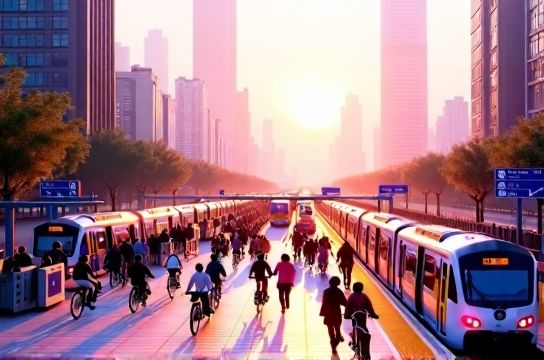
Let’s cut through the noise: public transit here is fast, affordable, and impressively efficient. But without local insight? You’ll waste hours. Here’s what actually works.
The Real Deal on Public Transit
Metro systems in cities like Shanghai and Guangzhou operate at over 99% punctuality. Buses integrate with subway apps, and bike-sharing is still king for last-mile travel. In fact, a 2023 Ministry of Transport report showed that 68% of urban commuters use mixed transit modes daily.
| City | Avg. Commute Time (min) | Metro Coverage (km) | Peak Hour Crowding Level |
|---|---|---|---|
| Beijing | 47 | 783 | ★★★★☆ |
| Shanghai | 42 | 808 | ★★★★★ |
| Shenzhen | 38 | 547 | ★★★☆☆ |
| Chengdu | 40 | 558 | ★★★☆☆ |
As you can see, while Shanghai has the most extensive network, it’s also the most crowded. Beijing runners-up in both coverage and congestion. For smoother rides, consider Shenzhen or Hangzhou—both investing heavily in smart transit tech.
Hacks Only Locals Know
First: download Alipay or MyMetro. These let you scan QR codes for subways and buses nationwide. No more fumbling for change.
Second: avoid peak hours. Rush hour in Beijing is 7:30–9:00 AM and 5:30–7:00 PM. During these windows, metro carriages hit 130% capacity. Seriously.
Third: use urban commuting strategies like "reverse commuting"—live near university zones (cheaper rent) and commute *outward* during peak times when trains are less packed.
Daily Routine That Actually Works
- 6:30 AM – Wake up, quick workout or tai chi in the park (popular among locals!)
- 7:15 AM – Leave home, catch first metro wave before full rush
- 8:00 AM – Start work (many offices start early to beat traffic)
- 12:00 PM – Lunch at local canteen or food court (avg. cost: ¥15–25)
- 6:30 PM – Dinner + light walk; avoid returning home until after 7:15 PM
- 8:30 PM – Study, hobby, or family time. Many use this for language learning or side gigs.
Stick to this rhythm, and you’ll blend right in. Plus, you’ll gain back nearly 10 hours a week compared to chaotic, unplanned days.
Final Thoughts
Mastering daily commutes in China isn’t about speed—it’s about strategy. With the right tools and timing, even the busiest cities feel manageable. Whether you’re an expat, digital nomad, or local professional, optimizing your routine starts with understanding the flow.