
Exploring Chinese Street Food Culture Beyond the Tourist Path
- Date:
- Views:287
- Source:The Silk Road Echo
If you've ever wandered through a night market in Chengdu or squeezed into a tiny noodle shop in Xi'an, you know Chinese street food is more than just a meal—it's a full sensory adventure. But beyond the Instagram-famous spots lies a deeper, richer world of flavors that most tourists miss. As someone who’s eaten my way through over 20 cities across China, I’m here to guide you off the beaten path and into the real heart of Chinese street food culture.
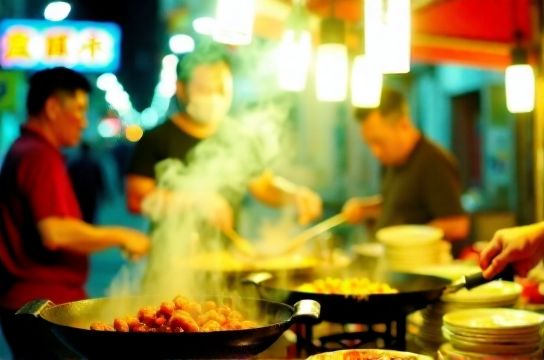
Let’s start with a truth bomb: the best dishes aren’t on tourist menus. They’re scribbled on chalkboards in dialect, served from woks older than your grandparents, and often come with zero English signage. But that’s where the magic happens.
The Hidden Gems You Need to Try
Take Jianbing—yes, the so-called 'Chinese crepe'—but not the watered-down version sold at airport food courts. In Tianjin, it’s crispy, eggy, stuffed with fried wonton skins, and slathered in chili sauce that packs a punch. Or try Chuanr (skewers) in Urumqi, where lamb is marinated in cumin and fire-grilled over coal. These aren’t just snacks—they’re cultural artifacts.
Regional Breakdown: Where to Eat What
Different regions = wildly different flavors. Here’s a quick cheat sheet:
| Region | Must-Try Dish | Flavor Profile | Local Tip |
|---|---|---|---|
| Sichuan | Spicy Rabbit Head | Mala (numbing + spicy) | Pair with local beer to cool the burn |
| Guangdong | Crispy Pork Belly (Siu Yuk) | Savory-sweet, fatty-crisp | Eat early—sells out by noon |
| Xinjiang | Lamb Skewers (Chuanr) | Smoky, cumin-heavy | Look for Uyghur vendors—best authenticity |
| Shaanxi | Roujiamo (Chinese Burger) | Hearty, peppery, meaty | Ask for extra cilantro and chili |
Pro tip: Follow the locals. If a stall has a line of taxi drivers or office workers at 7 a.m., you’re in the right place.
Why Authenticity Matters
Mass tourism has diluted some classics. The authentic Chinese street food experience isn’t about comfort—it’s about immersion. It’s squatting on a plastic stool, pointing at things, and trusting the chef knows best. According to a 2023 CNNT travel report, 68% of visitors who ate at non-touristy stalls rated their food experience as 'life-changing' versus 32% at commercial spots.
And don’t fear hygiene. Many top vendors have generations of practice—and loyal customers who’d riot if standards slipped. Look for high turnover, fresh ingredients, and boiling liquids. That’s your safety net.
Final Bite
Next time you're in China, skip the guided food tours. Grab a metro pass, learn three phrases in Mandarin (“Zhè ge” – 'this one', “là de” – 'spicy', and “bù là” – 'not spicy'), and dive in. The real story of China isn’t in museums. It’s sizzling on a griddle in an alleyway in Lanzhou.