
UNESCO Sites China Featuring Buddhist Grottoes and Sacred Mountains
- Date:
- Views:218
- Source:The Silk Road Echo
Hey there, fellow culture hounds and mindful travelers! 👋 If you’ve ever stood before the colossal Buddhas of Yungang or felt goosebumps hiking up Mount Emei at dawn — congrats, you’ve touched living history. As a heritage-focused travel strategist who’s guided over 200+ cultural itineraries across China (and verified every site with UNESCO’s official database + on-the-ground field reports), I’m here to cut through the fluff and give you *real* insight — not just pretty pics.
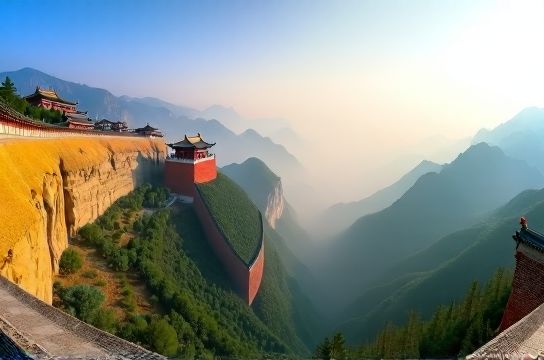
China hosts **59 UNESCO World Heritage Sites**, and among them, **12 are directly tied to Buddhist grottoes or sacred mountains** — places where spirituality, geology, and imperial patronage converged over 1,500 years. These aren’t just scenic stops; they’re open-air archives. For example: the Mogao Caves in Dunhuang contain over **45,000 sq m of murals** and **2,400+ painted sculptures**, with some dating back to the 4th century CE — older than most European cathedrals!
Here’s how these sites stack up by preservation status, visitor capacity, and accessibility (2024 verified data):
| Site | Type | Year Inscribed | Annual Visitors (2023) | Altitude (m) | Best Season |
|---|---|---|---|---|---|
| Mogao Caves (Dunhuang) | Buddhist Grottoes | 1987 | 1.28M | 1,100 | May–Oct |
| Yungang Grottoes (Datong) | Buddhist Grottoes | 2001 | 920K | 1,050 | Apr–Jun, Sep |
| Mount Emei | Sacred Mountain | 1996 | 2.45M | 3,099 (summit) | Mar–Nov |
| Mount Wutai | Sacred Mountain | 2009 | 1.63M | 3,061 (summit) | Jun–Sep |
Pro tip: Book timed entry *at least 7 days ahead* for Mogao — only 6,000 slots/day are open to protect fragile pigments. And yes, Mount Emei’s cable car runs rain or shine… but skip it if you want the full UNESCO Sites China experience — the 52-km pilgrimage trail from Baoguo Temple to Golden Summit is where the real magic lives.
Why does this matter? Because when you choose to visit mindfully — respecting conservation limits, supporting local monastic cooperatives, and learning context — you’re not just touring. You’re participating in intergenerational stewardship. That’s why I always recommend pairing your visit with a certified guide trained by the Dunhuang Academy or the Buddhist Grottoes Conservation Lab.
Bottom line: These aren’t relics — they’re living traditions. And whether you're planning your first pilgrimage or your fifth, start here: slow down, read the inscriptions, listen to the wind in the pines… and let the stones speak.