
The Silk Road Revisited: Tracing Ancient Trade and Culture
- Date:
- Views:328
- Source:The Silk Road Echo
Ever wondered how a simple thread of silk changed the world? Welcome to the Silk Road—not just a route, but a revolution. Stretching over 4,000 miles from China to the Mediterranean, this ancient network wasn’t just about trade; it was the original social media of its time, spreading ideas, religions, and innovations faster than you can say 'camel caravan'.
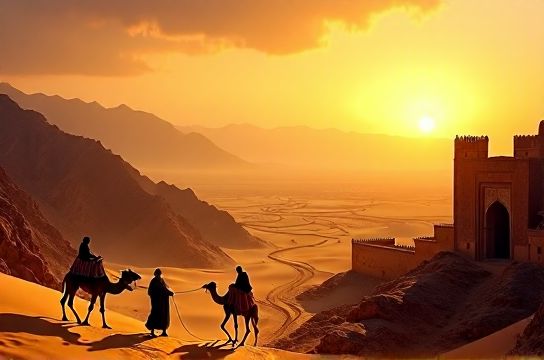
Let’s dive into the rich tapestry of history, culture, and commerce that defined one of humanity’s most legendary pathways.
The Silk Road by the Numbers
Before we unpack the stories, here’s a quick snapshot of what made this route so epic:
| Metric | Detail |
|---|---|
| Total Length | ~4,000 miles (6,400 km) |
| Active Period | 2nd century BCE – 15th century CE |
| Main Goods Traded | Silk, spices, porcelain, paper, gold, glassware |
| Cultures Connected | Chinese, Persian, Indian, Arab, Greek, Roman |
| Religions Spread | Buddhism, Islam, Christianity, Zoroastrianism |
More Than Just Silk: What Was Really Traded?
Sure, silk was the star—light, luxurious, and worth its weight in gold—but the real value? Knowledge. Paper and gunpowder moved westward from China, forever altering European warfare and record-keeping. Spices like cinnamon and saffron tickled taste buds from Constantinople to Chang’an.
And let’s not forget the unsung heroes: camels. The Bactrian camel, with its two humps, could survive up to 7 days without water. Talk about nature’s SUV!
Cultural Crossroads: Where East Met West
Cities like Samarkand, Bukhara, and Xi’an became melting pots of language, art, and faith. Buddhist monks traveled alongside Muslim scholars and Christian missionaries. Art from Gandhara (modern-day Pakistan) shows Buddha with curly hair and Roman-style robes—proof of cultural fusion long before globalization.
In fact, studies suggest that by the 8th century, over 1,000 foreign merchants lived in Chang’an (modern Xi’an), making it one of the first truly international cities.
Why It Still Matters Today
The legacy lives on. China’s Belt and Road Initiative (BRI) echoes the old Silk Road, aiming to connect 70+ countries through infrastructure. While modern politics shift, the spirit of exchange remains.
Travelers today can follow parts of the route—from the deserts of Dunhuang to the bazaars of Istanbul—experiencing tea houses, ancient caravanserais, and UNESCO World Heritage sites.
The Silk Road wasn’t just about moving goods. It was about moving minds. And honestly? We’re still riding that wave.