
Whispers of the Silk Road: Cultural Encounters in Dunhuang
- Date:
- Views:233
- Source:The Silk Road Echo
Imagine walking where camel caravans once creaked under the weight of silk, spices, and secrets. Welcome to Dunhuang, a desert gem where East met West, and art, religion, and trade danced under the Gobi sun. This isn’t just another Chinese city—it’s a living museum of cross-cultural magic.
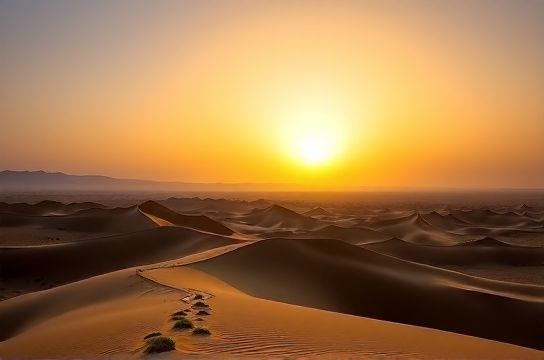
Nestled on the edge of the Taklamakan Desert, Dunhuang was the gateway to the Silk Road. For over a thousand years, monks, merchants, and mystics passed through, leaving behind a legacy carved into stone—most famously, the Mogao Caves.
The Mogao Caves: Heaven’s Art Gallery
With over 700 caves and 45,000 square meters of frescoes, Mogao is one of the world’s greatest treasure troves of Buddhist art. These caves weren’t built in a day—they span from the 4th to the 14th century, showcasing evolving styles from Gupta India to Tang Dynasty China.
Let’s break it down:
| Era | h>Number of Caves | Artistic Style | Notable Features |
|---|---|---|---|
| 4th–6th Century (Northern Wei) | ~50 | Gandharan Influence | Strong Hellenistic features, elongated figures |
| 7th–9th Century (Tang Dynasty) | ~300 | Floral & Realism | Vibrant colors, celestial musicians, detailed drapery |
| 10th–14th Century (Song & Yuan) | ~200 | Syncretic Buddhist-Taoist | Incorporation of local deities, narrative murals |
But here’s the kicker: in 1900, a Taoist monk named Wang Yuanlu stumbled upon Cave 17—the now-infamous 'Library Cave'. Inside? Over 50,000 manuscripts in Sanskrit, Tibetan, Uyghur, and Chinese. Texts ranged from Buddhist sutras to early printed books—even a rare copy of the Dunhuang Star Chart, the world’s oldest known star map.
Culture Clash & Harmony
Dunhuang wasn’t just about religion. It was a cultural blender. Persian traders sold lapis lazuli; Sogdian scribes wrote contracts in Aramaic script; Turkic guards patrolled oasis towns. The city became a UN of antiquity.
Archaeologists have unearthed bilingual coins, silk robes with Greek motifs, and even wine recipes using Central Asian grapes. Trade wasn’t just economic—it was culinary, artistic, and linguistic.
Modern Dunhuang: Echoes in the Sand
Today, Dunhuang balances preservation and tourism. UNESCO stepped in during 1987, but visitor numbers surged past 2 million annually by 2019. To protect the fragile caves, authorities now use a rotating access system and digital replicas.
Pro tip: visit in spring (April–May) or autumn (September–October). Summer temps hit 40°C (104°F), and winter winds howl like ancient spirits.
Don’t miss the Singing Sands Dunes at Mingsha Shan—yes, the sand really hums when it shifts. Pair that with a moonlit ride on Bactrian camels, and you’ve got pure cinematic magic.
Final Thoughts
Dunhuang isn’t just history—it’s a conversation across centuries. Every brushstroke in the Mogao murals whispers stories of connection, curiosity, and courage. So next time you sip tea or scroll through global news, remember: globalization didn’t start with the internet. It started with dusty boots on the Silk Road.
Come for the caves, stay for the soul.