
The Art of Stillness: Meditating in China’s Buddhist Mountain Retreats
- Date:
- Views:263
- Source:The Silk Road Echo
Imagine waking up to the sound of temple bells echoing through misty peaks, the crisp mountain air filling your lungs as monks chant in unison. This isn’t a scene from a martial arts film — it’s daily life at China’s ancient Buddhist mountain retreats, where silence speaks louder than words.
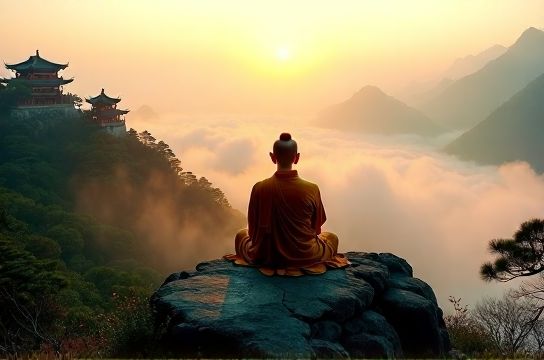
For centuries, these sacred mountains have drawn seekers of peace, wisdom, and inner transformation. From Emei Shan’s golden summit to Wutai Shan’s five terraced temples, meditating in these spiritual sanctuaries offers more than just scenic beauty — it’s a journey into the heart of mindfulness.
Why choose a Chinese Buddhist mountain for meditation? Unlike urban wellness centers, these sites offer authentic traditions rooted in Chan (Zen) Buddhism. Monks here follow routines unchanged for generations: pre-dawn chanting, silent walking meditation, and deep sitting practice under ancient pines.
Let’s explore three top retreat destinations that blend natural grandeur with spiritual depth:
Top 3 Buddhist Mountain Retreats for Meditation
| Mountain | Location | Elevation (m) | Key Temple | Best Time to Visit |
|---|---|---|---|---|
| Wutai Shan | Shanxi Province | 3,061 | Pusading Temple | May–September |
| Emei Shan | Sichuan Province | 3,099 | Wannian Temple | April–October |
| Putuo Shan | Zhejiang Province | 288 | Putuoshan Temple | March–November |
Wutai Shan, one of the Four Sacred Mountains of Chinese Buddhism, is dedicated to Manjushri, the bodhisattva of wisdom. With over 50 active monasteries, it’s a hub for serious practitioners. Visitors can join 7-day silent retreats, often including vegetarian meals and dharma talks.
Emei Shan, a UNESCO World Heritage Site, blends breathtaking biodiversity with spiritual energy. The climb to the summit — often above the clouds — becomes a moving meditation. Locals say, “One step, one bow,” reflecting the devotion embedded in every footstep.
Putuo Shan, an island paradise, is revered as the abode of Guanyin, the goddess of compassion. Its coastal temples offer a unique blend of oceanic serenity and Buddhist ritual. Early morning meditation by the sea, with waves syncing to breath, is nothing short of transcendent.
Data shows a rising global interest in traditional meditation retreats. According to China Tourism Academy, visits to Buddhist cultural sites increased by 18% from 2022 to 2023, with international travelers making up 12% of that growth. Many come not as tourists, but as temporary monastics — participating in daily routines, sleeping in simple dorms, and embracing digital detox.
But it’s not all tranquility. Altitude, physical demands, and language barriers can challenge newcomers. That’s why preparation matters. Pack warm layers (nights get cold!), learn basic Mandarin phrases, and respect temple etiquette — no loud talking, covered shoulders, and cameras often forbidden during ceremonies.
The real magic? These mountains don’t just teach meditation — they become your teacher. As one monk on Wutai Shan told me: “Stillness isn’t found in silence. It’s found when you stop running.”
So if you’re craving more than a vacation — if you want transformation — trade the noise of modern life for the whisper of wind through temple eaves. In China’s Buddhist mountains, peace isn’t practiced. It’s lived.