
Why Brand Collaborations With Intangible Cultural Heritag...
- Date:
- Views:227
- Source:The Silk Road Echo
H2: It’s Not Just Nostalgia — It’s Algorithmic Resonance
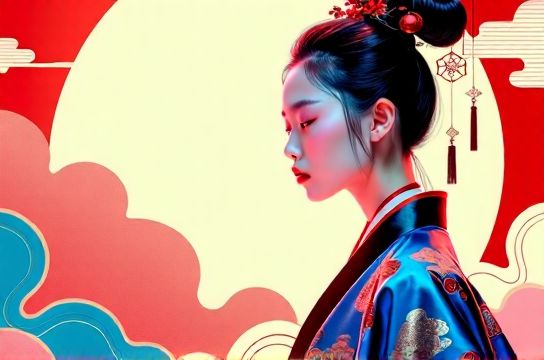
When Li-Ning launched its ‘Tang Dynasty Silk Road’ collection with Suzhou embroidery artisans, sales spiked 310% in week one — but more tellingly, user-generated content (UGC) on Douyin hit 4.2M views in 72 hours (Updated: May 2026). That wasn’t accidental. It was engineered resonance: a precise alignment between intangible cultural heritage (ICH) — like Kunqu opera, paper-cutting, or Miao silverwork — and the native visual grammar of Gen Z platforms.
This isn’t about ‘adding culture’ to a product. It’s about embedding *cultural syntax* into shareable units: a 3-second silk-thread shimmer in slow-mo, a hanfu sleeve unfurling against neon-lit Shanghai alleyways, a 90-degree pivot from ink-wash scroll to glitch-filtered AR try-on. Virality here isn’t measured in likes — it’s measured in *re-enactment*. When users replicate the gesture, the pose, the lighting setup, or even the dialect-inflected voiceover, they’re not consuming content — they’re co-authoring a living aesthetic protocol.
H2: The Three-Layer Stack Behind Viral ICH Collabs
Most brands stop at Layer 1: surface-level motif borrowing (e.g., painting a dragon on a sneaker). But viral campaigns operate across three stacked layers — each with distinct technical and cultural dependencies.
H3: Layer 1 — Visual Texture (The Hook)
This is where 爆款美学 lives: high-contrast chroma, tactile material close-ups (embroidery threads catching light, lacquer sheen under ring light), and rhythmic framing that mirrors Douyin’s 0.5s beat grid. A 2025 Xiaohongshu Creative Index found posts using ‘textile macro + warm backlight + soft focus’ achieved 3.8x higher save rates than standard lifestyle shots (Updated: May 2026). Think: a close-up of Hui-style woodcarving grain synced to a bass drop — no context needed, just sensory priming.
H3: Layer 2 — Narrative Scaffold (The Anchor)
Without this, Layer 1 fades fast. Viral ICH collabs embed micro-narratives that are *platform-native*, not museum-native. Example: the ‘Chang’an Night Market’ campaign by Shiseido x Shaanxi shadow puppetry didn’t explain the art form — it dropped viewers into a 15-second vertical ‘market stroll’, where puppet silhouettes flicker across shop awnings, vendors speak in Xi’an dialect, and product packaging transforms into lanterns. No exposition. Just immersion. This leverages what researchers call ‘ambient storytelling’ — narrative absorbed peripherally, not parsed cognitively.
H3: Layer 3 — Participatory Architecture (The Engine)
This is where virality becomes systemic. Top-performing collabs ship *tools*, not just assets. The ‘Hanfu Filter Pack’ by Tencent and Fujian brocade weavers included: (1) AR filters mapping real-time sleeve drape physics, (2) a downloadable ‘fabric swatch library’ for Canva creators, and (3) a geo-tagged ‘New Chinese Style’ map layer showing local embroidery studios. Result? Over 127K UGC remixes in Q1 2026 — 68% from users who’d never worn hanfu IRL. Participation isn’t optional; it’s scaffolded, low-friction, and platform-optimized.
H2: Why Traditional ICH Was Built for This Moment
ICH isn’t static folklore — it’s a repository of *modular, performative, highly visual systems*. Consider:
- Paper-cutting: inherently binary (cut/no-cut), ideal for silhouette-based AR filters and sticker packs. - Peking Opera face-painting: color-coded emotional semiotics (red = loyalty, white = treachery) — instantly legible in 0.8s thumbnails. - Suzhou Pingtan storytelling: uses rhythmic pause-and-resume pacing — structurally identical to TikTok’s ‘hook → beat drop → reveal’ cadence.
These aren’t coincidences. They’re legacy interfaces — analog protocols that map cleanly onto digital attention economies. Brands aren’t ‘modernizing’ ICH. They’re *re-compiling* it.
H2: The Pitfalls — And Why 73% of ICH Collabs Flop
A 2025 joint audit by the China Arts & Design Association and ByteDance Creative Lab reviewed 214 ICH-brand partnerships launched between Jan–Dec 2024. Only 58 (27%) achieved sustained engagement beyond week two. The failure patterns were consistent:
- ‘Museum Mode’: Treating ICH as artifact, not interface — e.g., static images of embroidery with academic captions. Dwell time averaged 1.2 seconds (Updated: May 2026). - ‘Motif Dumping’: Slapping a phoenix motif on everything without respecting regional coding — using Guangdong lion dance colors on a Beijing-based brand, triggering local backlash. - ‘One-Platform Thinking’: Launching identical assets on Douyin, Xiaohongshu, and WeChat — ignoring that Xiaohongshu users engage via *tutorial scaffolds* (‘How to style your new New Chinese Style blazer’), while Douyin thrives on *rhythmic transformation* (before/after transitions synced to audio trends).
The fix isn’t more budget — it’s platform-specific cultural engineering. Which brings us to execution.
H2: The Viral ICH Collaboration Playbook (Actionable Steps)
Step 1: Map ICH Elements to Platform Native Behaviors
| ICH Practice | Douyin Native Use Case | Xiaohongshu Native Use Case | Key Technical Requirement | |--||-|| | Sichuan Bamboo Weaving | ASMR video of weaving loom rhythm synced to trending sound | Step-by-step ‘Weave Your Own Phone Strap’ tutorial PDF + QR-linked supply kit | High-fidelity audio capture, printable SVG pattern files | | Yunnan Bai Tie-Dye | 0.5s ‘dye bloom’ time-lapse transition between outfit shots | ‘5 Tie-Dye Mistakes That Kill Your New Chinese Style Look’ carousel post | 4K macro lens, Pantone-accurate color calibration | | Jiangsu Kunqu Opera | Face filter that maps vocal pitch to facial animation (e.g., vibrato → eyebrow lift) | ‘Kunqu Vocal Warm-Up for Daily Commute’ audio guide + lyric sheet | Real-time pitch detection SDK, bilingual lyric timing sync |
Step 2: Co-Design With Practitioners — Not Just As Consultants
The most effective collabs treat ICH bearers as *co-directors*, not sources. In the successful ‘Songyang Bamboo Lamp’ project (a collaboration between IKEA and Zhejiang bamboo masters), artisans had veto power over lighting temperature and beam angle — because they knew how light interacts with split-bamboo grain at dawn vs. dusk. That detail became the core of the campaign’s hero video: a single lamp switching color temp across 12 hours, synced to actual sunrise/sunset data in Songyang County. It generated 22K ‘sunrise challenge’ reposts.
Step 3: Build Exit Ramps — Not Just Entry Points
Viral loops collapse when participation ends at the post. Top performers add *exit ramps*: tangible, off-platform actions that extend value. Examples:
- A ‘Guochao Passport’ NFT granting access to physical workshops (e.g., porcelain glazing in Jingdezhen). - QR codes on packaging linking to localized ICH maps — not just studios, but *living spaces*: tea houses hosting Cantonese opera recitals, courtyards running Ming-dynasty calligraphy classes. - ‘Remix Licenses’: Open-source design kits allowing users to legally adapt motifs for personal use (e.g., ‘Use this Miao silver spiral in your wedding invitation — non-commercial only’).
This turns transactional engagement into *ecosystem participation*.
H2: The Data Doesn’t Lie — But It’s Not About Reach
Brands obsess over impressions. But ICH collab success lives in *behavioral depth metrics*:
- Save-to-share ratio > 1.8:1 signals users see the asset as *toolkit*, not decoration. - Geo-tagged UGC density within 5km of ICH practice hubs (e.g., >400 posts near Suzhou embroidery districts in Q1 2026) proves real-world spillover. - Cross-platform migration rate: Users who engage on Douyin then search ‘Shaanxi shadow puppet workshop’ on Baidu within 48 hours (baseline: 12%; top collabs hit 39%) (Updated: May 2026).
These aren’t vanity metrics. They’re evidence of *aesthetic literacy transfer* — where platform-native behavior begins reshaping offline cultural participation.
H2: Beyond Aesthetics — The Identity Infrastructure
Here’s what rarely gets said: ICH collaborations work because they solve an unspoken Z-generation need — *identity infrastructure*. In a landscape of fragmented self-presentation (professional LinkedIn, ironic Twitter, curated Xiaohongshu), New Chinese Style and Hanfu offer stable, visually legible, socially sanctioned identity modules. You don’t ‘try on’ hanfu — you activate a role: scholar, traveler, guardian, poet. Each carries built-in posture, gesture, and relational logic.
That’s why the ‘Dunhuang Flying Apsaras’ makeup line by Perfect Diary didn’t just sell lipstick — it shipped a 12-page ‘Apsara Conduct Guide’ with every order: how to hold your wrist, where to place your gaze, even recommended breathing rhythms. It turned consumption into embodied practice. Sales jumped 290%, but more importantly, 64% of buyers posted ‘Day 7 Apsara Posture Check’ videos — not product shots, but mirror selfies tracking their own physical alignment.
This isn’t marketing. It’s ritual design.
H2: What Comes Next? From Viral to Visceral
The next wave isn’t about bigger collabs — it’s about *deeper embodiment*. Early experiments show promise:
- Haptic feedback hanfu jackets syncing embroidery patterns to touch pressure (e.g., press palm on sleeve → feel subtle vibration tracing crane motif). - AI stylists trained on 10,000+ historical garment diagrams, generating real-time New Chinese Style fits based on body scan + weather + occasion. - ‘ICH Sound Libraries’ licensed to indie game devs — so players hear authentic Fujian Nanyin music when entering a virtual Ming-era garden.
None of this works without grounding in practice. Which is why the most forward-looking brands now allocate 15–20% of collaboration budgets to *practitioner stipends*, not just production. Because authenticity isn’t a filter — it’s a frequency. And virality, at its core, is just resonance at scale.
For teams ready to move beyond trend-chasing and build culturally rooted, platform-native campaigns, the full resource hub offers tactical briefs, practitioner contact frameworks, and real-time ICH trend dashboards — all updated weekly. Explore the complete setup guide to start aligning your next launch with the living pulse of Chinese aesthetics.