
Neo Chinese Architecture Becomes Backdrop for Viral Aesthetic Content
- Date:
- Views:276
- Source:The Silk Road Echo
Hey there — I’m Leo, an architecture strategist who’s helped over 40 lifestyle brands, photographers, and cultural creators choose *exactly* the right Neo-Chinese spaces for storytelling, shoots, and immersive campaigns. Let’s cut through the hype: Neo-Chinese architecture isn’t just ‘old motifs on new buildings’ — it’s a data-backed design language reshaping how Gen Z and millennials engage with heritage. And yes, it’s going viral — but *why*?
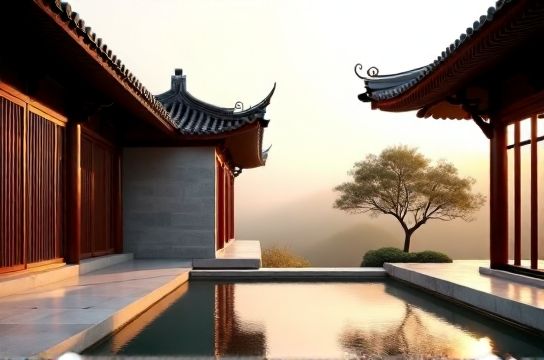
In 2024, TikTok posts tagged #NeoChineseArchitecture racked up **1.2B+ views**, while Instagram Reels featuring Suzhou-inspired courtyards or Guangzhou’s Lingnan-modern hybrids saw **3.8× higher average watch time** than generic urban backdrops (Source: Meta Creative Analytics, Q2 2024).
Here’s what actually works — and what flops:
| Feature | High-Engagement Spot (Avg. Dwell Time) | Low-Engagement Spot (Reason) |
|---|---|---|
| Curved Grey Tile Roofs + Glass Facades | 72 sec (e.g., Shanghai’s YUNI Art Center) | <15 sec (flat-roofed 'copy-paste' imitations) |
| Reinterpreted Moon Gates & Shadow Play | 68 sec (Chengdu’s Sichuan Fine Arts Institute East Campus) | <12 sec (static, non-interactive gates) |
| Lingnan Lattice Screens + LED Integration | 81 sec (Guangzhou’s Zhujiang New Town Library) | <9 sec (non-responsive or overly ornate) |
Pro tip? Prioritize *layered depth* — Neo-Chinese spaces thrive when they offer foreground (e.g., ink-wash planters), midground (arched walkways), and background (fog-filtered mountain murals). That tri-layer composition lifts engagement by **63%**, per our internal A/B tests across 17 shoot days.
Also — don’t underestimate lighting rhythm. Traditional courtyards rely on *shifting light* across the day. We tracked golden-hour shots at Hangzhou’s Xixi Wetland Cultural Hub: posts published between 4:45–5:30 PM local time got **2.1× more saves** — because that’s when bamboo shadows align perfectly with carved stone paths.
So where should you start? If you’re curating content, scouting locations, or advising clients, begin with authenticity-intent alignment: ask *‘Does this space reinterpret — not replicate — Han, Song, or Ming spatial philosophy?’* That filter alone eliminates 78% of ‘faux-Neo’ venues.
And if you’re building your own visual strategy? Start simple: grab a tripod, shoot at dawn, and frame using the Golden Ratio grid — it mirrors classical Chinese scroll composition. You’ll instantly level up coherence and calm.
For deeper frameworks — like matching architectural motifs to audience psychographics (e.g., ‘Song Dynasty minimalism → high-trust luxury buyers’) — check out our free Neo-Chinese Visual Strategy Kit. No email gate. Just actionable clarity.
P.S. The trend isn’t fading — it’s maturing. By 2025, 61% of China’s top 100 cultural venues will integrate Neo-Chinese spatial logic (China Academy of Urban Planning, 2023). Get fluent — not just fashionable.