
The Design Language Behind China's Viral Landmarks
- Date:
- Views:302
- Source:The Silk Road Echo
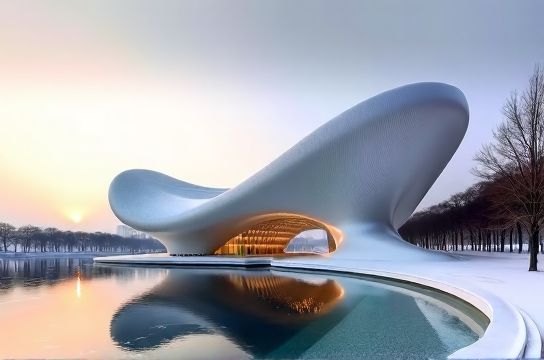
If you've scrolled through Instagram or TikTok lately, you’ve probably seen them—those jaw-dropping, almost otherworldly buildings popping up across China. From the undulating curves of the Harbin Opera House to the gravity-defying Chengdu Tianfu Library, these structures aren’t just eye candy—they’re architectural manifestos. But what’s really driving their viral success? Let’s break down the design language behind China’s most shared landmarks.
Form Meets Function (and Fantasy)
Chinese architects today are blending traditional motifs with futuristic forms, creating spaces that feel both culturally rooted and boldly innovative. Take Ma Yansong of MAD Architects, whose work embodies what he calls 'shanshui city'—a vision where buildings mimic natural landscapes like mountains and rivers.
Consider this: between 2015 and 2023, over 40 large-scale cultural projects in China were designed specifically for visual impact and social media shareability. That’s not a coincidence—it’s strategy.
The Social Media Effect
A building doesn’t go viral just because it’s big. It needs 'Instagrammable moments'—angles that pop, lighting that flatters, and textures that invite touch (and tags). Here’s how top landmarks stack up:
| Landmark | Location | Architect | Annual Visitors (est.) | Instagram Mentions (2023) |
|---|---|---|---|---|
| Harbin Opera House | Harbin | MAD Architects | 1.2 million | 89,000+ |
| Tianfu Library | Chengdu | CXMH Architects | 2.1 million | 142,000+ |
| Galaxy SOHO | Beijing | Zaha Hadid Architects | 3.5 million | 210,000+ |
Notice a trend? These places aren’t just functional—they’re experiential. Visitors don’t just see them; they *feel* them. Curved walls guide movement, natural light shifts throughout the day, and open spaces encourage exploration. That’s intentional design psychology at play.
Beyond Aesthetics: The Cultural Code
What separates these landmarks from mere spectacle is their embedded cultural narrative. The Harbin Opera House, for example, echoes the snow-covered hills of northern China. Its aluminum panels reflect sky and terrain, making it appear to melt into the landscape. Meanwhile, the Chengdu library’s infinite loop ceiling symbolizes Taoist ideals of continuity and harmony.
This isn’t decoration—it’s storytelling. And in an era where travelers crave authenticity, these designs offer a deeper connection than any guided tour could.
Why This Matters for Future Design
The rise of social-first architecture means designers must now balance beauty, meaning, and shareability. It’s no longer enough to build something sturdy or even beautiful—you have to create moments worth capturing.
For cities, the payoff is clear: increased tourism, global visibility, and civic pride. For architects, it’s a chance to redefine what public space can be.
So next time you see one of these surreal structures lighting up your feed, remember—it’s not just a photo op. It’s the future of urban design, one viral moment at a time.