
Visual Identity of China's Youth Subcultures
- Date:
- Views:372
- Source:The Silk Road Echo
If you’ve been scrolling through Chinese social media lately—whether it’s Douyin, Xiaohongshu, or Bilibili—you’ve probably noticed something wild: youth subcultures in China aren’t just about music or fashion. They’re full-on visual revolutions. And as someone who’s spent the last five years diving deep into urban youth trends across Beijing, Shanghai, and Chengdu, I can tell you—the aesthetics are real, intentional, and seriously influential.
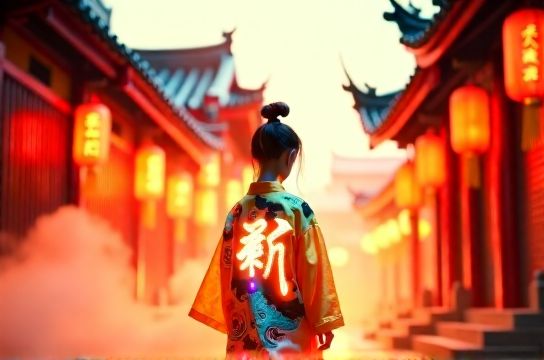
Forget the idea that Chinese Gen Z is all about conformity. In reality, they’re crafting bold visual identities that challenge norms and blend global influences with local flavor. From Cyber Hanfu to Street Loong (yes, that’s ‘dragon’ reimagined), these subcultures use imagery like a language.
Let’s break down the top three movements shaping China’s youth visual landscape right now—and why brands and creators should be paying attention.
Cyber Hanfu: Tradition Meets Neon
Imagine ancient silk robes… but glowing with LED trim, paired with chunky sneakers and AR filters. That’s Cyber Hanfu, a fusion trend growing fast among Gen Z. According to a 2023 report by iiMedia Research, over 68% of Chinese youth aged 15–24 have engaged with Hanfu-related content online—with nearly 30% blending it into modern streetwear.
| Subculture | Key Visual Elements | Primary Platforms | Youth Reach (Est.) |
|---|---|---|---|
| Cyber Hanfu | LED-trimmed robes, digital makeup, AR overlays | Bilibili, Xiaohongshu | 47 million |
| Street Loong | Graffiti dragons, oversized techwear, martial arts motifs | Douyin, Weibo | 39 million |
| Dreamcore Nostalgia | VHS filters, retro game UIs, analog glitch art | Bilibili, QQ Zone | 28 million |
Street Loong: Urban Mythmaking
This one’s my personal favorite. Street Loong takes the dragon—a symbol often seen as state-sanctioned or ceremonial—and turns it into a rebellious, street-level icon. Think spray-painted dragons on alley walls in Shanghai’s Jing’an district or hoodie designs with coiled serpents and cybernetic eyes.
What makes this movement powerful isn’t just the look—it’s the message. It’s about reclaiming cultural symbols and giving them a voice that feels raw and real. A 2024 survey by Tencent’s Youth Lab found that 54% of participants associated Street Loong visuals with ‘resistance through beauty.’
Dreamcore & Digital Nostalgia
Last but not least: Dreamcore. Inspired by early-2000s internet aesthetics, this style uses distorted audio, pixelated avatars, and eerie pastel palettes. It’s less about identity performance and more about emotional resonance. Many creators tie it to feelings of loneliness, memory loss, or digital fatigue.
Why does this matter? Because visual identity isn’t just self-expression—it’s a signal. For marketers, understanding these cues means better engagement. For creators, it’s about authenticity. And for anyone studying modern China, it’s proof that youth culture here is anything but monolithic.
So next time you see a teen in Hangzhou rocking a dragon-print face mask with Hanfu sleeves and a VR headset, don’t blink. You’re witnessing the future—one filtered, stylized, and deeply symbolic frame at a time. And if you're exploring these styles yourself, remember: true youth subculture expression isn’t about copying looks. It’s about remixing meaning.