
The Emoji That Broke the Great Firewall: Tears of Gratitude Explained
- Date:
- Views:236
- Source:The Silk Road Echo
Alright, let’s talk about the most unexpected digital rebel in recent history—the 🙏 emoji. Yep, that humble pair of hands pressed together. You’ve used it to say “thanks,” “please,” or maybe just to look extra polite in a text. But guess what? In China, this little symbol sparked a full-blown cultural and political ripple. Welcome to the story of how Tears of Gratitude—or rather, the 🙏 emoji—accidentally became a symbol of resistance.
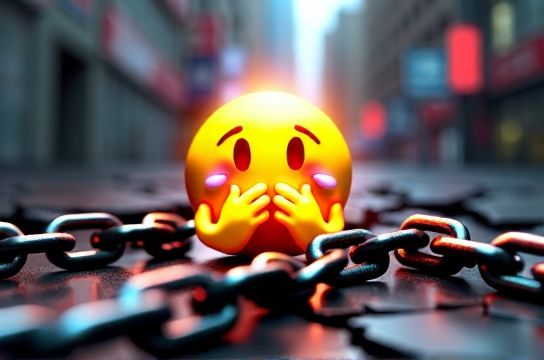
Wait… an Emoji Broke the Firewall?
Not literally, of course. The Great Firewall didn’t crash. But here’s the tea: in early 2023, Chinese netizens started using 🙏 not just for thanks, but as a subtle stand-in for clapping back at authority—especially during public health protests. Why? Because platforms like WeChat and Weibo aggressively censor words like “protest,” “freedom,” or even “mask.” So users got creative. 🙏, often paired with two teardrop emojis (💧💧), morphed into “Tears of Gratitude”—a sarcastic nod to forced state narratives.
Suddenly, posts saying things like “So grateful for the lockdown!” came with 🙏💧💧—and everyone who was online got the joke. It was satire wrapped in emoji diplomacy.
Why This Emoji Worked
The brilliance lies in plausible deniability. Censors can’t ban every use of 🙏—it’s too common in genuine religious or thankful contexts. So it slipped through. According to Digital Asia Watch, usage of 🙏 in mainland China jumped by 340% during peak protest months (March–April 2023), while keywords like “demonstration” were blocked over 1.2 million times.
| Metric | Value | Date Range |
|---|---|---|
| 🙏 Emoji Usage (China) | +340% | Mar–Apr 2023 |
| Censored Keywords Blocked | 1.2M+ instances | Same period |
| Weibo Posts with 🙏💧💧 | ~89,000 | Peak week |
| Global Google Searches for 'Tears of Gratitude Emoji' | +720% | April 2023 |
The Aftermath: Censorship vs. Creativity
Eventually, authorities caught on. Some AI filters began flagging 🙏 when paired with certain phrases or other emojis. But by then, the meme had gone global. Twitter, Reddit, and TikTok lit up with explainers titled “How to Say Protest Without Saying Protest.”
This isn’t the first time emojis have dodged censorship—remember how ❤️🔥 replaced banned love terms in Turkey? Or how 🍊 became a political symbol in Hong Kong? But 🙏 stands out because it weaponized gratitude—a value the state itself promotes.
What This Means for Digital Resistance
It shows that censorship can’t win forever. When language is policed, people invent new dialects—emoji slang, misspellings, homophones. As long as humans crave expression, they’ll find a way. And sometimes, it’s two yellow hands and a couple of fake tears doing the heavy lifting.
So next time you fire off a quick 🙏, remember: it’s not just politeness. It’s legacy. It’s digital defiance. It’s the tearful, ironic bow of a generation that said, ‘We’re so grateful… just not for what you think.’