
Understanding 'Fan Quan': The Fandom Culture Shaping China’s Online Discourse
- Date:
- Views:379
- Source:The Silk Road Echo
If you've scrolled through Chinese social media lately, you've probably stumbled upon the term Fan Quan (粉丝圈)—or as we like to call it, the wild, wired world of Chinese fandoms. But this isn’t just about teens squealing over idols. Fan Quan has evolved into a powerful digital subculture that shapes online trends, influences public opinion, and even challenges traditional media.
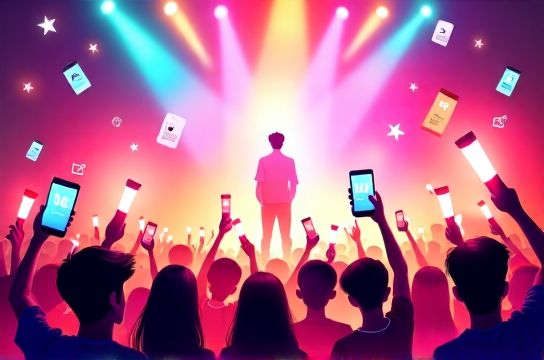
So what exactly is Fan Quan? Literally translating to 'fan circle,' it refers to tightly-knit online communities of fans who obsessively support celebrities—especially in pop music, TV dramas, and variety shows. Think BTS ARMY meets Twitter stan culture—but with more organization, more drama, and way more power.
These aren't casual followers. We're talking about fans who mobilize like digital armies. They boost streaming numbers, manipulate search rankings, flood comment sections, and even fund luxury billboards in Times Square—all to elevate their idol's status. In 2023, Cai Xukun’s fans reportedly spent over ¥10 million ($1.4M) on digital album purchases in a single week. That’s not fandom; that’s financial warfare.
But here's the twist: Fan Quan isn't just about love—it's about control. These communities operate with near-military precision. Senior fans act as 'data managers,' assigning daily tasks like liking posts, trending hashtags, or attacking critics. Dissent? Not welcome. Idol controversies often spark massive online witch hunts, where opposing voices are doxxed or silenced.
The scale is staggering. According to iResearch, China’s fan economy was worth over ¥80 billion ($11B) in 2023, with over 500 million active participants—mostly Gen Z and young millennials. Platforms like Weibo, Douyin, and Xiao Hong Shu have become battlegrounds for visibility, where algorithms favor engagement, and fans exploit them ruthlessly.
How Fan Quan Dominates the Digital Game
To understand their influence, check out this breakdown of common Fan Quan tactics:
| Tactic | Purpose | Example |
|---|---|---|
| Data Farming | Inflate likes, views, shares | Idol’s MV hits 100M views in 48hrs |
| Hashtag Campaigns | Trend topics on Weibo | #ZhouYangShanBirthday topped charts |
| Commercial Support | Mass purchase of endorsed products | Fans buy 10,000 units of a shampoo brand overnight |
| Criticism Suppression | Silence negative press | Report articles, spam comments |
This hyper-organized behavior has drawn scrutiny. In 2021, China’s Cyberspace Administration cracked down on 'irrational fandom,' banning ranking systems and vote-rigging in reality shows. Yet, Fan Quan adapts—moving to private groups, encrypted chats, and decentralized platforms.
Why does this matter? Because Fan Quan isn’t just shaping celebrity culture—it’s reshaping how information spreads online. It’s a masterclass in digital mobilization, showing how passion, when organized, can rival corporate or political influence.
Love it or hate it, Fan Quan is here to stay. And if you're navigating China’s internet landscape—whether as a marketer, journalist, or curious observer—you’d better understand the rules of the fan circle game.