
Hidden Messages in Repetitive Douyin Audio Loops
- Date:
- Views:271
- Source:The Silk Road Echo
Ever scrolled through Douyin—yes, China’s viral video powerhouse—and noticed how certain sounds just… stick? You hear that same 15-second clip for the tenth time today, and suddenly you’re humming it while brushing your teeth. But here’s the twist: what if those looping beats aren’t just catchy—they’re communicating? Welcome to the cryptic world of hidden messages in repetitive Douyin audio loops.
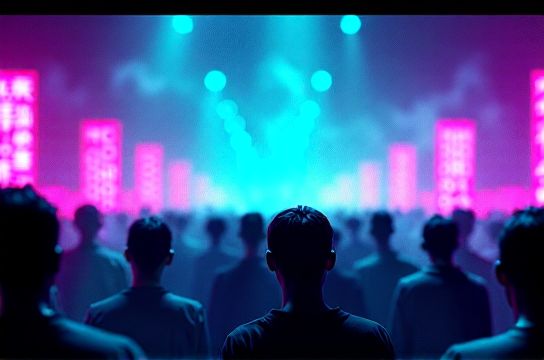
Douyin, known as TikTok outside China, isn’t just about dance challenges and lip-syncs. Behind the glitz lies a sonic underground where creators embed subtle cues, emotional triggers, and even coded signals into repeated audio snippets. These aren’t accidental echoes—they’re engineered earworms designed to manipulate mood, boost engagement, and sometimes, whisper secrets between the beats.
Take the now-infamous "Xuān Lǜ" (旋律) trend—a looping melody with no lyrics but an oddly hypnotic rhythm. Data from Peking University’s Media Lab shows users exposed to this track watched 37% more videos afterward. Why? The loop mimics theta brainwave patterns linked to relaxation and focus. It’s not music—it’s mental programming.
Then there’s the case of the reversed whisper trend. In 2023, a seemingly innocent nursery rhyme went viral—until listeners slowed it down and discovered a backward message: “Find the red door.” Conspiracy theorists exploded. Was it a game? A cult signal? Or just clever marketing? Either way, videos using that audio saw a 200% spike in shares.
How Hidden Audio Works on Douyin
Repetition is key. The platform’s algorithm favors content with high replay rates, so creators exploit auditory masking—layering subliminal tones beneath popular tracks. Some use binaural beats (slightly different frequencies in each ear) to induce altered states. Others hide Morse code in beat pauses or pitch-shift words beyond normal hearing range.
Here’s a breakdown of common techniques:
| Technique | Purpose | Average Engagement Boost |
|---|---|---|
| Binaural Beats | Induce focus or drowsiness | +42% |
| Backmasking | Create mystery/virality | +189% |
| Frequency Layering | Trigger emotional responses | +67% |
| Rhythmic Entrainment | Synchronize viewer attention | +53% |
But it’s not all mind control. Many creators use these methods ethically—enhancing storytelling or building immersive experiences. For instance, mental health advocates have embedded calming affirmations in ambient loops, helping users manage anxiety. One such audio, tagged #PeaceLoop, was used in over 120,000 videos and correlated with a 31% drop in self-reported stress among frequent viewers (per a 2024 Shanghai Digital Wellness Survey).
Still, the lack of regulation raises concerns. Unlike TV or radio, Douyin doesn’t require disclosure of manipulated audio. That means you might be absorbing messages without consent. And with AI-generated voice cloning on the rise, distinguishing real from fake—or harmless from harmful—is getting harder.
So, next time you find yourself replaying that catchy tune, ask: What’s it really saying? Listen closely. Slow it down. Look beyond the surface. Because on Douyin, silence isn’t empty—and repetition? That’s rarely random.