
Douyin Creators Leading the Next Wave of Online Buzzwords
- Date:
- Views:277
- Source:The Silk Road Echo
In the fast-paced world of social media, one platform has emerged as the ultimate trendsetter in China — Douyin, the domestic version of TikTok. While many scroll through for entertainment, savvy internet users know that Douyin is more than just dance challenges and lip-syncs; it’s where online buzzwords are born, shaped, and catapulted into mainstream culture.
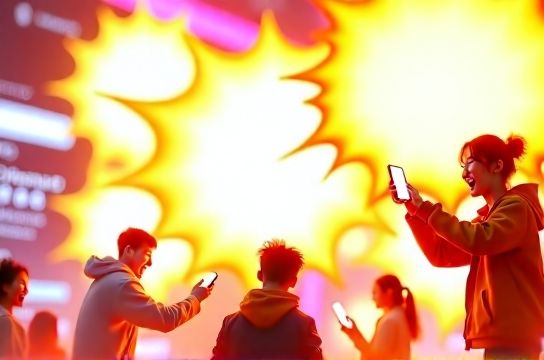
From viral catchphrases like “Jiāo wǒ xiǎo Zhāng” (Call me Xiao Zhang) to quirky slang such as “Nèi jué sī” (That’s so cool), Douyin creators aren’t just influencers — they’re linguistic architects. And with over 700 million monthly active users in China alone, their impact on digital language is nothing short of revolutionary.
How Douyin Became China’s Slang Factory
The secret lies in Douyin’s algorithm. Unlike traditional platforms where content spreads slowly, Douyin’s AI-driven feed pushes highly engaging videos to millions within hours. When a creator drops a clever phrase in a 15-second clip, it can go from zero to national meme status overnight.
Take the rise of "Zhuāng níng" — originally a sarcastic term for someone pretending to be tough or cool. It started in a comedy sketch by Douyin star @Li_Taotao, who mocked overconfident gym bros. Within a week, the term was trending on Weibo, Baidu, and even made its way into live TV shows.
Top 5 Buzzwords Born on Douyin (2023–2024)
| Buzzword | Meaning | Origin Creator | Viral Reach (Est.) |
|---|---|---|---|
| Nèi jué sī | Cool, awesome (slang) | @Xiao_Ming_Official | 2.1 billion views |
| Zhuāng níng | Pretending to be tough | @Li_Taotao | 890 million views |
| Jī dōng | Excited, hyped up | @DanceQueen_S9 | 1.3 billion views |
| Méng yǐn | Feeling emotionally overwhelmed | @CryBaby_Luna | 620 million views |
| Wǒ tài nán le | I’m having a hard time | @Real_Emo_Kid | Over 3 billion views |
These aren’t just passing fads. Many have entered everyday speech, especially among Gen Z and young millennials. Brands are catching on too — Livestream hosts now weave these terms into pitches, boosting engagement by up to 40%, according to a 2023 report by QuestMobile.
Why These Creators Rule the Digital Tongue
Douyin’s top linguistic influencers share a few traits: sharp timing, cultural awareness, and an uncanny ability to tap into youth emotion. They don’t just create phrases — they package feelings into bite-sized audiovisual moments.
For example, @CryBaby_Luna didn’t just say "Méng yǐn" — she paired it with a tearful selfie cam video set to melancholic piano music. The emotional resonance made it instantly relatable, sparking thousands of user-generated duets and reactions.
And let’s not forget the power of repetition. A single phrase repeated in different contexts — humor, sadness, romance — embeds itself deeper into public memory. That’s how "Wǒ tài nán le" evolved from a joke to a genuine expression of struggle.
The Ripple Effect Beyond Douyin
Once a buzzword hits critical mass on Douyin, it spills over. You’ll hear it on WeChat group chats, see it in online ads, and even spot it on subway billboards. Some make it onto variety shows like Happy Camp or are quoted by celebrities during interviews.
This crossover power makes Douyin creators some of the most influential voices in Chinese digital culture — not because they have the most followers, but because they shape how people speak, feel, and connect.
Final Thoughts: Speak Like a Native, Think Like a Creator
If you're trying to understand modern Chinese youth culture, start with Douyin’s trending page. Watch closely, listen carefully, and pay attention to the phrases that keep popping up. Because in today’s digital age, language isn’t just communicated — it’s performed.
And if you want to stay ahead of the curve? Follow the creators. They’re not just making videos — they’re writing the next chapter of internet slang.